
You can take the boy out of the bubbles…but not the bubbles out of the boy.
By Paul Mavis
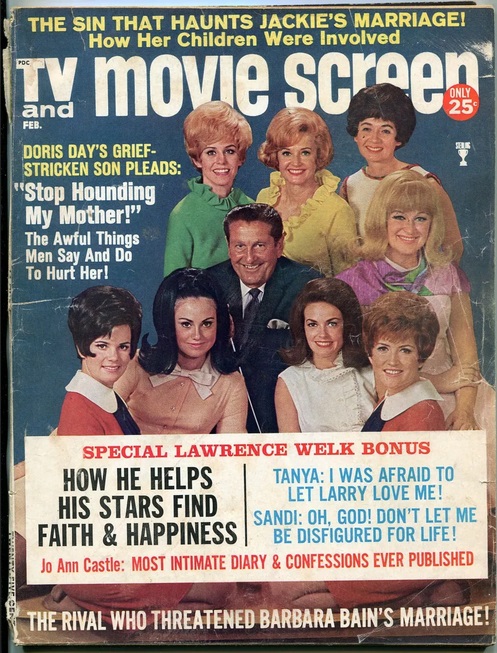
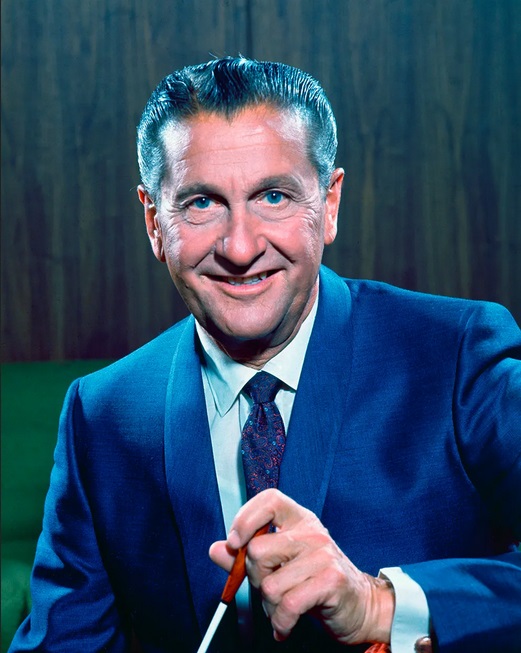
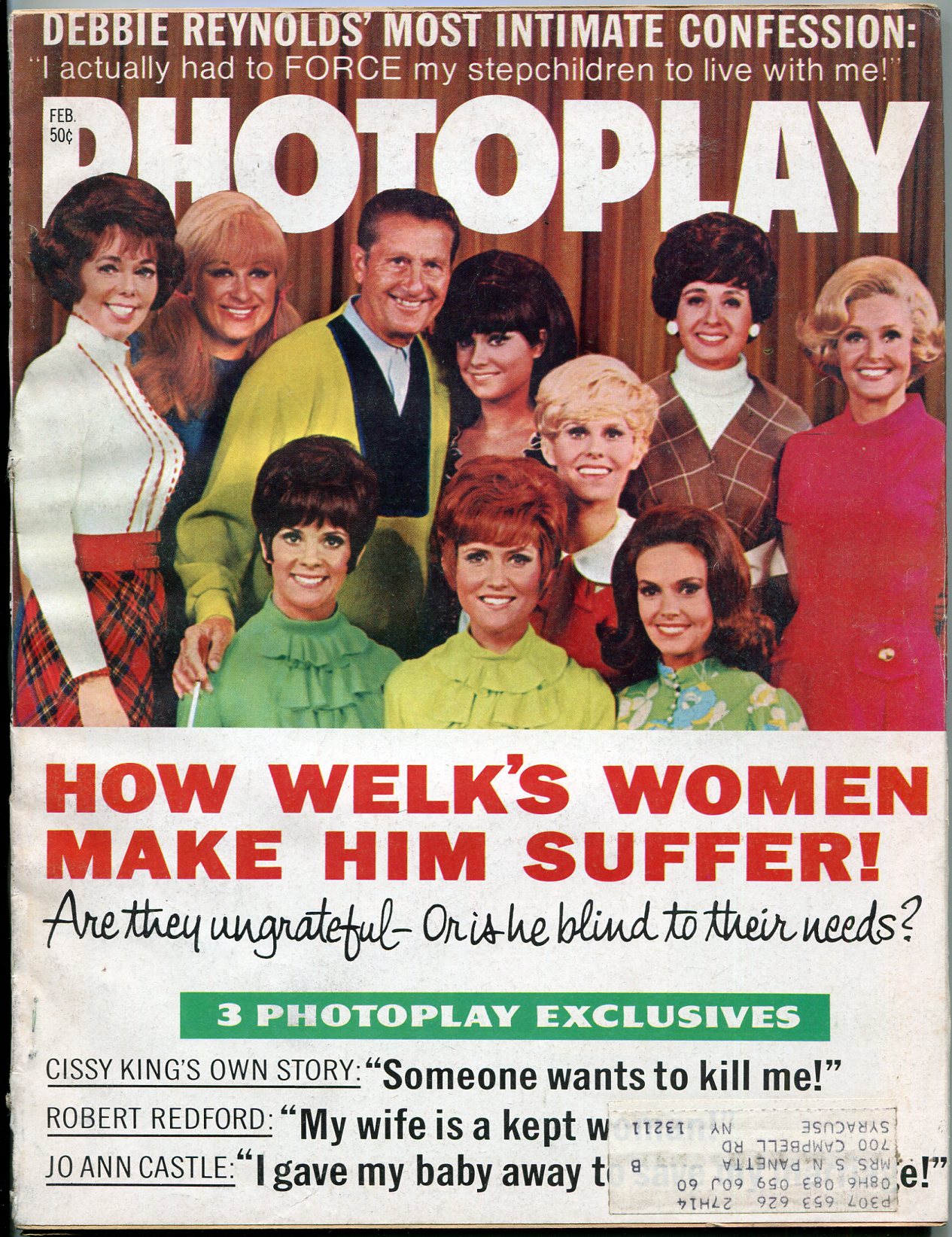
Oh man if my Grandma could only see me now―she’d be so proud. A few years back, Synergy Entertainment released The Lawrence Welk Show: Classic Episodes, Vol. 1 – 4, a 4-disc, 12-episode collection of black and white kinescopes of ABC’s long, long running musical variety show, hosted by that “ah-wunnerful, ah-wunnerful” accordion-playing, baton-wielding maestro, Lawrence Welk, and featuring his “Musical Family” of “Champagne Music Makers.”
Click to order The Lawrence Welk Show: Classic Episodes, Vol. 1 – 4:
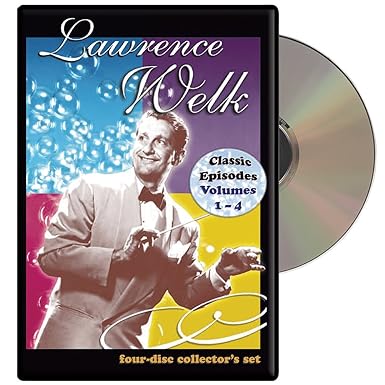
(Paid link. As an Amazon Associate, the website owner earns from qualifying purchases.)
Representing the show during its peak network years (1960-1968), these kinescopes aren’t all complete, and they’re certainly rough from an A/V standpoint…but baby, that is some sweet, sweet, easy-going music getting laid down here: against all reason, against all logic…I’m proud to finally declare myself a born-again Welk-oholic.
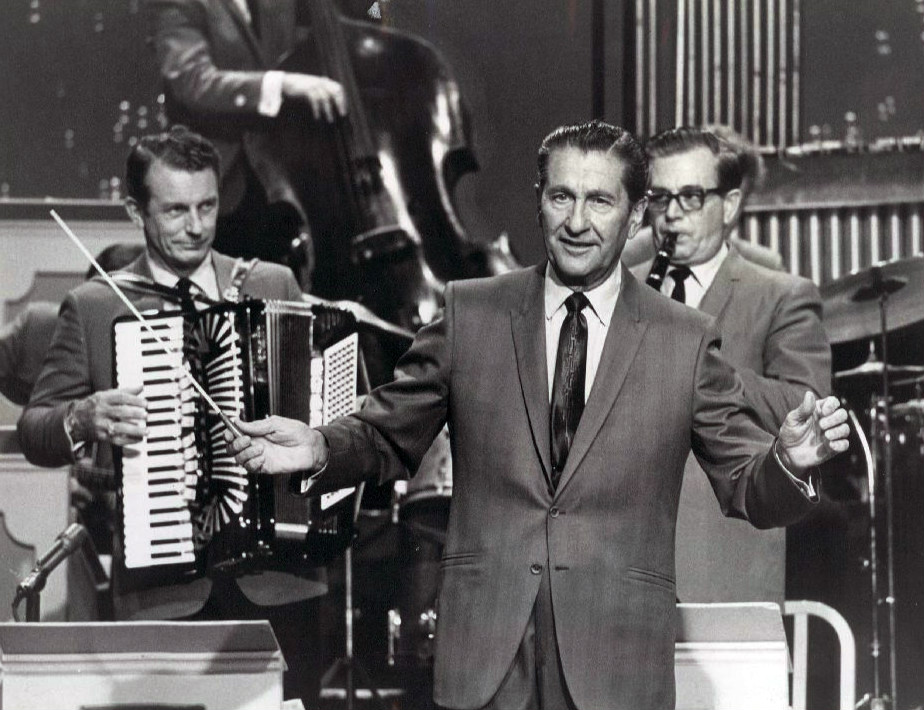
The personification of the “American Dream,” Lawrence Welk, the son of dirt-poor North Dakotan German immigrant farmers (by way of Russia), learned to play the accordion at an early age after he convinced his father to buy the expensive instrument in exchange for Lawrence staying on the farm until he was 21 years old. Once free from his family obligation in 1924, Welk began touring the Midwest with small bands until he formed several of his own, evolving from jazz and ragtime influences to a smooth, easy-going big band sound that Welk eventually termed “champagne music” for its bubbly, light feel.
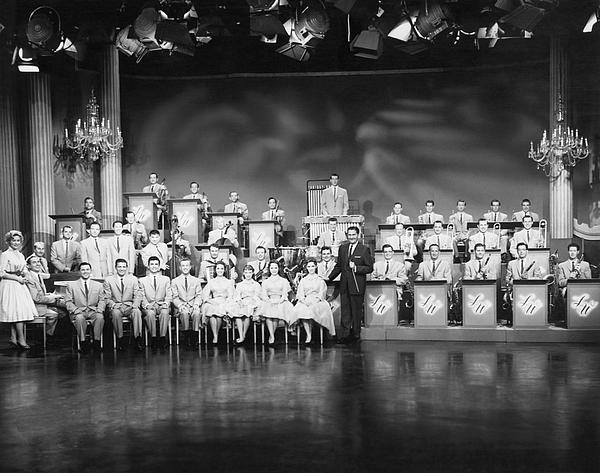
Gradually gaining success during the 1940s at the big-city hotel ballrooms and in the recording studios, Welk and his orchestra found a permanent home base in Los Angeles when local television station KTLA produced The Lawrence Welk Show in 1951, where it was broadcast live from the famed Aragon Ballroom in Venice Beach. A growing hit with viewers, Welk’s program lasted four years at the local level until fledgling “Big Three” network ABC, trying hard to get something into the Nielsen’s, saw the potential in Welk’s L.A. ratings and broadcast the show nationally (helped along, as well, by carmaker Dodge’s initial participation).
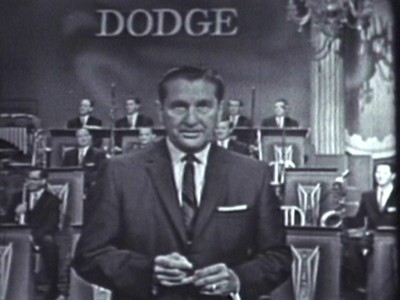
Premiering in 1955 on Saturday nights at 9:00pm (it moved to 8:30pm in 1963), The Lawrence Welk Show gained an ever-growing loyal audience of older and family viewers, and in the process managed to become that rarest of ABC programs from the 1960s: a Nielsen Top Twenty hit. Noted for its longevity, The Lawrence Welk Show stayed on the ABC primetime schedule until the end of the 1970-1971 season, when it was arbitrarily cancelled in the Big Three’s slightly inaccurately monikered “rural purge,” that saw other still-popular series that demographically skewed older and rural (and family) like Hee-Haw, The Beverly Hillbillies, Mayberry, R.F.D., The Johnny Cash Show, Wild Kingdom, and My Three Sons, deliberately sacrificed for the urban young adult demos actively sought by advertisers.
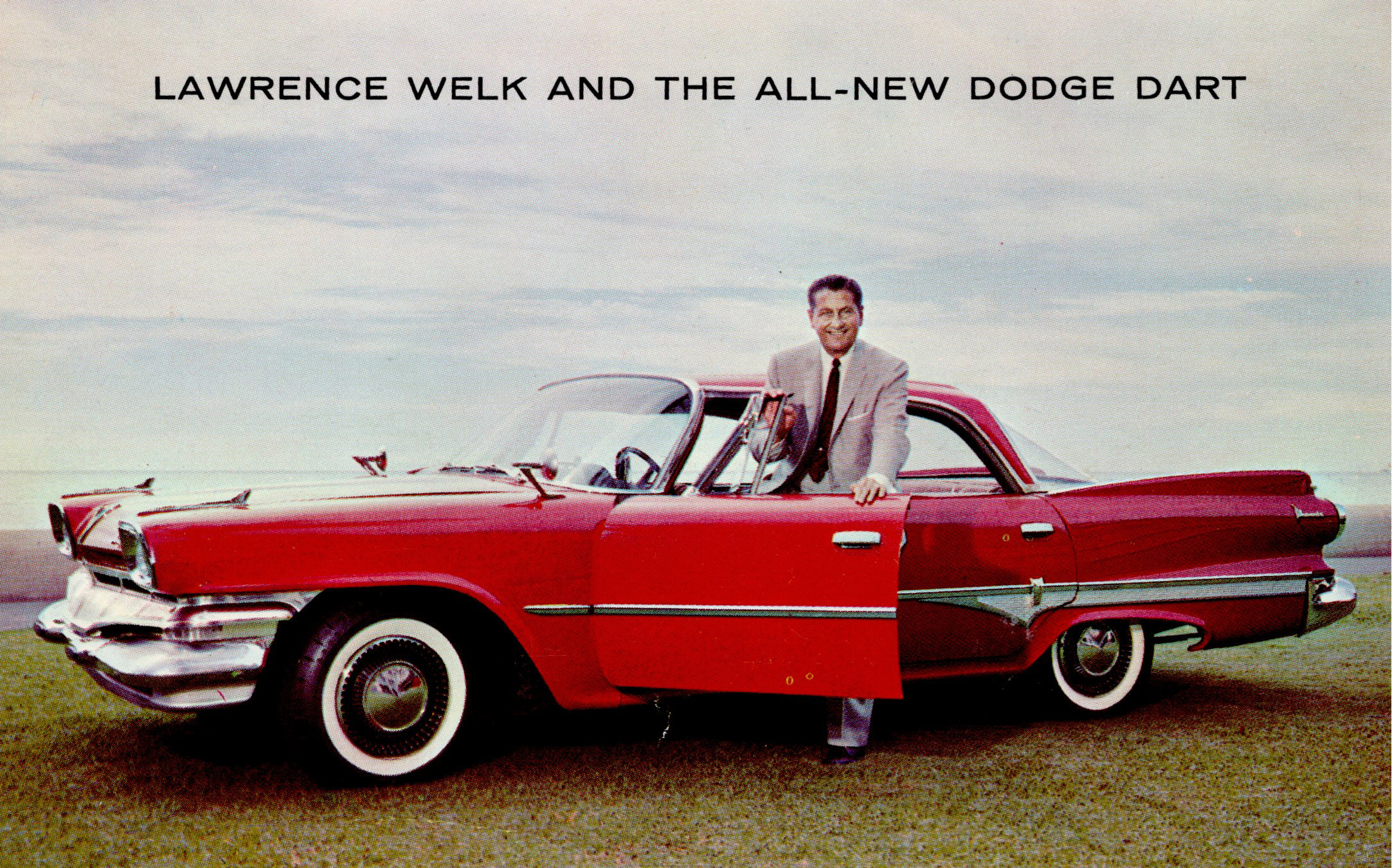
Welk, noted just as much off-camera for his business acumen as for his on-camera talents, politely thanked ABC for 17 years on their network…and promptly formed his own production company, offering The Lawrence Welk Show for first-run syndication to any stations that would have him. Remarkably, over 250 stations signed on (including many of his former ABC stations that didn’t want to lose his stellar ratings), and for another ten years, The Lawrence Welk Show bubbled along, frequently clobbering network shows run against its traditional Saturday night time slot. Welk officially retired in 1982, closing down production on original episodes of the show…but then he turned around and filmed new bumpers for the old episodes (a practice still done today with some of the remaining “Champagne Music Makers”) and reran the episodes all over again, where they still play on public television to this day.
I’ve written before about the rediscovered joys of geriatric TV watching (which, lets face it…now pretty much encompasses everything I grew up on), but The Lawrence Welk Show by comparison was an entirely different kettle of fish for this Day-One TV addict: I hated it as a kid. Absolutely despised it. If we were over at my Grandma’s on the weekend, there were three givens that you just had to deal with: pot roast and coconut crème pie in the oven, Jackie Gleason’s easy-listening LPs on the Sears Silvertone, and The Lawrence Welk Show on her refrigerator-sized Magnavox console color set (after that heavy meal, no wonder Welk was on: you were in a coma).
Now, I had a Close ‘N’ Play record player in my bedroom, and I used to put in it all my Disney Record Club albums, and those paper Brady Bunch, Partridge Family, and Monkees 45s you’d cut off the back of the cereal boxes…but no way was Lawrence Welk a featured performer on that bill. Calculated to calm and soothe, the E-Z Flow musical variety format of The Lawrence Welk Show was the total antithesis of what I wanted to watch when I had the rare chance to see color TV (“Puh-leeeeze, Grandma can we just watch Emergency!???” was the most frequent, impotent refrain).
But no dice, pal. Grandma was as loyal to Lawrence as she was to Robert Young and Liberace, so if you brats can’t calm down and just listen to the nice music, maybe a Welk-sponsor Sominex will help, washed down with a little Geritol chaser.
So why review Synergy’s The Lawrence Welk Show: Classic Episodes, Vol. 1 – 4 if I hated the show as a kid? Well, as I’ve written many times before, if you love TV…you gotta love all of it. And truth be told, I’ve been sneaking a little bit of Welk on the side for the past few years. I avoid PBS like the plague (old PBS ruled; new PBS? F*ck ’em), but if my tax dollars are unnecessarily going to fund that dubious enterprise, I might as well enjoy something on it, and I must confess,their re-runs of The Lawrence Welk Show have been a silent (but not guilty) pleasure of mine for some time now.
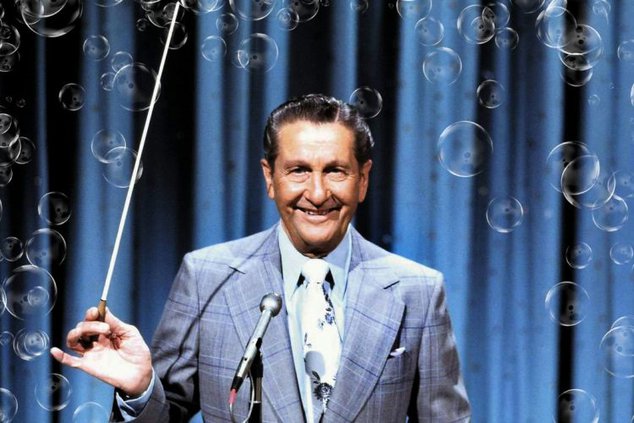
To be clear, though: if you’re familiar with those color re-runs, the The Lawrence Welk Show: Classic Episodes, Vol. 1 – 4 are earlier, rough-looking black and white kinescope episodes from the show’s heyday on ABC (there’s conflicting information on when the show quit broadcasting live and switched to videotape, so I’ll let a true Welk “fanatic”―you better believe I tiptoe around that word after the whole “Fugitive music track/death threat” fiasco―give me better info). So here, don’t expect the relatively clean-looking, color-saturated videos reruns on PBS.
This is the hard stuff for vintage TV lovers: crappy kinescope copies with blurry, scratched, noisy images and popping, sizzling audio tracks that strain the eye and ear but oftentimes yield unexpected delights―like The Lawrence Welk Show: Classic Episodes, Vol. 1 – 4. You can view The Lawrence Welk Show: Classic Episodes, Vol. 1 – 4 strictly from a historian’s perspective, and have a good time doing so. However, as fascinating as it always is to see how television was thought of and conceived and executed during those first decades of its inception, you can enjoy these episodes strictly for the music and showmanship, as well (you may not like the arrangements, but everyone is note perfect, time after time).

Of course, Welk was pilloried by commentators from the very beginning of his TV career, with music and TV critics deriding his work as homogenized, middle-of-the-road pap for the undiscerning (the same unfair charge leveled at another early TV superstar who appealed to families and the older set: Liberace). Those kinds of elitist snipes ultimately come down to matters of personal taste, regardless of how much “book learnin'” critics use to back them up. Welk’s ultra-smooth, polished production isn’t going to be to everyone’s taste, but I find it quite charming and yes, relaxing as counterpoint today…so what the hell’s wrong with that?
Certainly the perpetuated mainstream pop culture façade strove to present a more genteel, more polite, more complacent America of this time; after all, during the time span of these episodes from The Lawrence Welk Show: Classic Episodes, Vol. 1 – 4, when Welk gave us warmed-over versions of Hot Diggity Dog Diggity, Winchester Cathedral, and Stephen Foster tunes, Kennedy and King were assassinated, Charles Manson and Richard Speck orchestrated mayhem, and the U.S. became entangled in the Vietnam thicket. Sour critics point to a series like The Lawrence Welk Show and charge it was an illustration or even a part of some overreaching societal “problem” because it didn’t address the “reality” of its time.
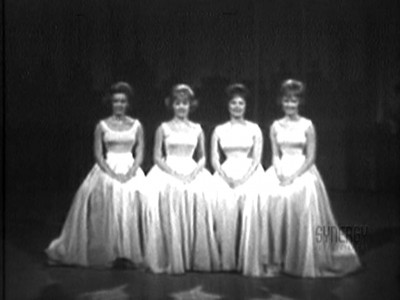
The Lawrence Welk Show is so…otherworldly “square,” so unlike anything in the mainstream pop culture today, it’s rather touching by comparison. I’m not fooled into thinking, by the placid sentiments of the songs or the pasteurized atmosphere carefully created by Welk, that this is how things really were in America back then (a favorite canard of liberal pop culture critics). There wasn’t anything naïve or sentimental about how Welk achieved his persona and eventual business empire.
I would counter that Welk knew full well that it wasn’t The Lawrence Welk Show‘s job to address any of that reality; its job was simply to entertain. And its façade―no more “real” or “unreal” than the pictures painted on the opposite side of the artistic spectrum―is a fabrication I now find completely fascinating…and quite poignant.
Spread over four discs, the 12 episodes here offer continuous delights. In the opener, the Father’s Day Special from June 18th, 1960, check out how loose and funny Welk could be when the show was broadcast live (he kids nicely with his floor director and producer on this fifth anniversary show). Particular favorite Jo Ann Castle, “Queen of the Ragtime Pianists,” goes completely apesh*t slapping those ivories in a fantastic version of Down Yonder, while Welk gets down (as much as he can) with smiling, laughing Myron Floren in a wild accordion duet.
Floren and Castle have a nice accordion duet of their own with Hot Foot Polka on the Variety Special from April 14th, 1962, but nothing can compare with longtime Welk tenor Jimmy Roberts and violinist/comedian/orator Aladdin switching off during a ultra-sincere, almost bizarre version of Elvis Presley’s Are You Lonesome Tonight? (I can absolutely guarantee that the King―a closet square himself―loved this). Check out how Welk is practically mobbed by the matrons in the audience who want a fast waltz with him, and get ready for “Muzak for Mortuaries” with Jerry Burke’s icky organ rendition of Mancini’s Moon River. Bobby Burgess and Barbara Boylan (cute together) dance to Del Shannon’s Runaway here (another sign that Welk was hip to including relatively new music…as long as it was “Welk-anized”), while Castle, Aladdin, and Bob Lido sing a bee-zare Honky Tonk Twist that puts Welk into hysterics.
On the Tribute to the Movies episode from April 7th, 1962, those silky smooth dolls, the Lennon Sisters (I feel faint…), do an impossibly velvety Swingin’ On a Star (sweet Jesus palomino they drive me crazy…), while Aladdin tags off on The Last Time I Saw Paris…dressed like a French street painter (I find that kind of Welk obviousness completely endearing). And Kathy Lennon, who must have scored some nice letters from the audience (Welk’s method of determining who got air time) has a nice solo with Somewhere Over the Rainbow.
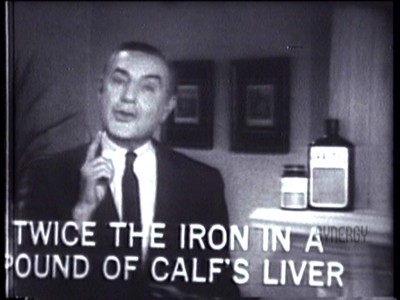
On the Gypsy Special episode from January 16th, 1965, Welk tenor Joe Feeney cracks up Welk with his costumed version of Play, Gypsy, Play (“Even dressed up as a gypsy, Joe looks exactly like an Irishman,” Welk jokes to the laughing band…the only kind of ethnic humor that would get a pass today), while violinist Joe Livoti kills with an absolutely beautiful solo. September 17th, 1966’s September Song special may have the Lennon Sisters doing The Beatles’ Yesterday (am I the only person in the world who despises that schmaltzy, sickly song?), but I was more interested in the vintage commercials that remained here, including plugs for Bufferin, Polident (“Meet a modern denture wearer.”), Sominex (“Absolutely not habit-forming!”), and Granny’s favorite tipple, Geritol!
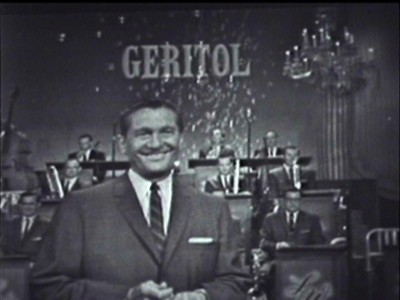
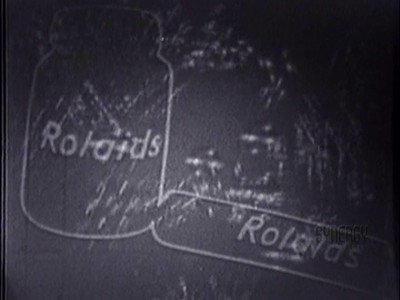
Singer/dancer Arthur Duncan delivers a polished Wrap Your Troubles in Dreams on the In-Crowd Special from March 7th, 1965, and check out the (possible?) subliminal plug for Rolaids in the opening titles for the Music the Fun Way episode from March 18, 1967 (which also includes Welk’s Billboard-charting version of Winchester Cathedral. In-between the commercials for Alka-Seltzer and Vivarin stimulant tablets (“Give yourself a lift!”) and FemIron (“The very, very feminine iron tablet.”), Welk discovery Sandi & Sally have a smashing contemporary duet called Can’t Stop Running Away (if they had been featured on any other show, like Shindig or Hootenanny, they would have been huge―they’re terrific).
For the Veterans’ Day Special from November 6th, 1965, Aladdin has a rather stirring recitation from S.C. DeLove’s Can We Wave It [the American Flag] Too Much (remember when most Americans loved their country, regardless of differing opinions? I mean really loved it?), but Norma Zimmer’s God Bless America is gutted on this kinescope. The delightful Sandi and Sally are back in February 24th, 1968’s Mardi Gras Special, singing Way Down Yonder in New Orleans (love them), while Welk delivers up a completely credible “Welk-anized” version of Spooky, with Welk’s intro (“Here’s ah song that’s verrry big wit the younger set,”) and closer (“Thank ya thank ya, boys, a real good beat-ah,”), completely killing me.
My favorite episode, though, has to be when Welk journeys into Walt Disney territory with the Set at Home special from September 18th, 1965, where Welk hosts on-location at his very own Lawrence Welk Country Club Mobile Home Estates (now the Welk Resort and Champagne Village), right outside of Escondido, California. Oh sure, we get songs on this episode…but more importantly, we get to see Welk golf (he gets realistically pissed when one of the Lennon sisters beats him putting); we get to see the inside of what is purported to be Welk’s and his wife’s “cottage” mobile home (quite large), with a Mediterranean motif of gold and olive green (we have to trust that with the b&w), a king-sized bed, and a kitchen where “everything you need to make cooking a pleasure” is included (I would live in that in “ah one and a two-uh” seconds).
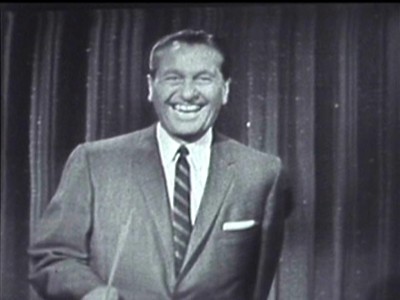
The cast drives up into the hills and sings, and there’s a bar-b-que picnic, complete with three-legged and sack races, and a dance contest for the small fry, all presided over by a justifiably proud Welk, who even dishes out the hamburgers―all of them well-done, apparently…’cause that’s all he calls out (f*ck off with your carping about the patriarchy. Seriously―f*ck off). I don’t know how many wistful television viewers back in 1965 were seduced by this idyllic presentation of mobile home life in the sunny, sunny hills of Cal-ee-forn-eye-A…but it had me scrambling for the Google search (check out the goddamn prices of those double-wides today).
When you get past your urge for sneering and snorting at anything that seems square and fusty and old-fashioned (hey, I do it too, sometimes), you begin to appreciate Lawrence Welk’s sharp, bright musicianship, his so-square-it’s-fun showmanship, and just how plain entertaining it all is. These are the kinds of episodes that vintage TV lovers live for: a glimpse into a past that has completely vanished. “Now, until next week, stay happy, and keep a song in your heart. Good night.”
Read more of Paul’s TV reviews here. Read Paul’s film reviews at our sister website, Movies & Drinks.
 Drunk TV
I liked Welk personally, but not his musical approach so much as I was and am still at the Glenn Miller-Jimmy Dorsey stage. As for PBS, it is not a surprise the current incarnation is despicable. They are NPR.
LikeLiked by 2 people
I remember the fluffy dresses that the female dancers used to wear. Good times!
LikeLiked by 1 person
Absolutely…so entirely different than today. And it wasn’t that long ago!
LikeLiked by 1 person
A Saturday night ritual at our house in the 1970s. Dad in particular was a big fan.
LikeLike
As a kid, Sunday night and the Welk theme song meant school tomorrow. Even worse was the Jerry Lewis Telethon – that meant summer holidays were over. My folks always got sucked in by the kid in a wheelchair singing “Somewhere Over the Rainbow”.
LikeLike