
In case all 17 of my readers were wondering, I’ve been on medical leave here at the Drunk TV offices, and haven’t been posting much. Nothing serious, just life threatening. Fortunately, our fearless leader and editor, Jason (or as he gently chides, “That’s ‘Mr. Hink‘ to you, scumbag!”) has excellent health coverage here so everything’s fine. For him. He has the coverage. I have none.
By Paul Mavis
So in addition to stolen medical supplies and cheaper street drugs to keep me alive, my family has also been keeping me steadily stocked with media, including a nice Blu-ray collection, from Warner Bros.’ Archive Collection, of the 1972-1974 Hanna-Barbera nighttime syndicated animated sitcom, Wait Till Your Father Gets Home.
Click to order Wait Till Your Father Gets Home: The Complete Series on Blu-ray:

(Paid link. As an Amazon Associate, the website owner earns from qualifying purchases.)
Originally premiering as an episode/pilot on the old ABC farm league series, Love, American Style (“Love and the Old-Fashioned Father”), the feedback was encouraging enough for Hanna-Barbera to go ahead with a full series. However, it wasn’t picked up by the Big 3 networks. Instead, taking advantage of the recent programming opportunities provided by the FCC’s Prime-Time Access Rule, which “took away” the first half-hour of the networks’ “prime time” schedules and gave them back to local stations (in an effort to encourage more independent, local-inspired programming…hahahah!), H-B was able to sell Wait Till Your Father Gets Home directly to local stations who were scrambling to fill their new prime time half hours with anything other than “more independent, local-inspired programming.”

When H-B’s Wait Till Your Father Gets Home premiered way back in 1972, I was just a little kid, but I vividly remember watching it because, as anyone from that generation will tell you, new cartoons rarely if ever showed up in the evening hours (animated specials around the holidays were about it for new product). So when they did, it was a pretty big thing.

But you had to have cool parents, though (or be left alone to grow feral, like mine), if you wanted to see those toons or the new, “fun adult” shows that were starting to pop up on television; you know, the “naughty” stuff by Norman Lear like All in the Family or Maude. So when I discovered that Hanna-Barbera was doing a night-time syndicated cartoon that played and sounded like the Bunkers, I was in heaven. Cartoons mixed with the possibility of “dirty” jokes? What more could a seven-year old want?
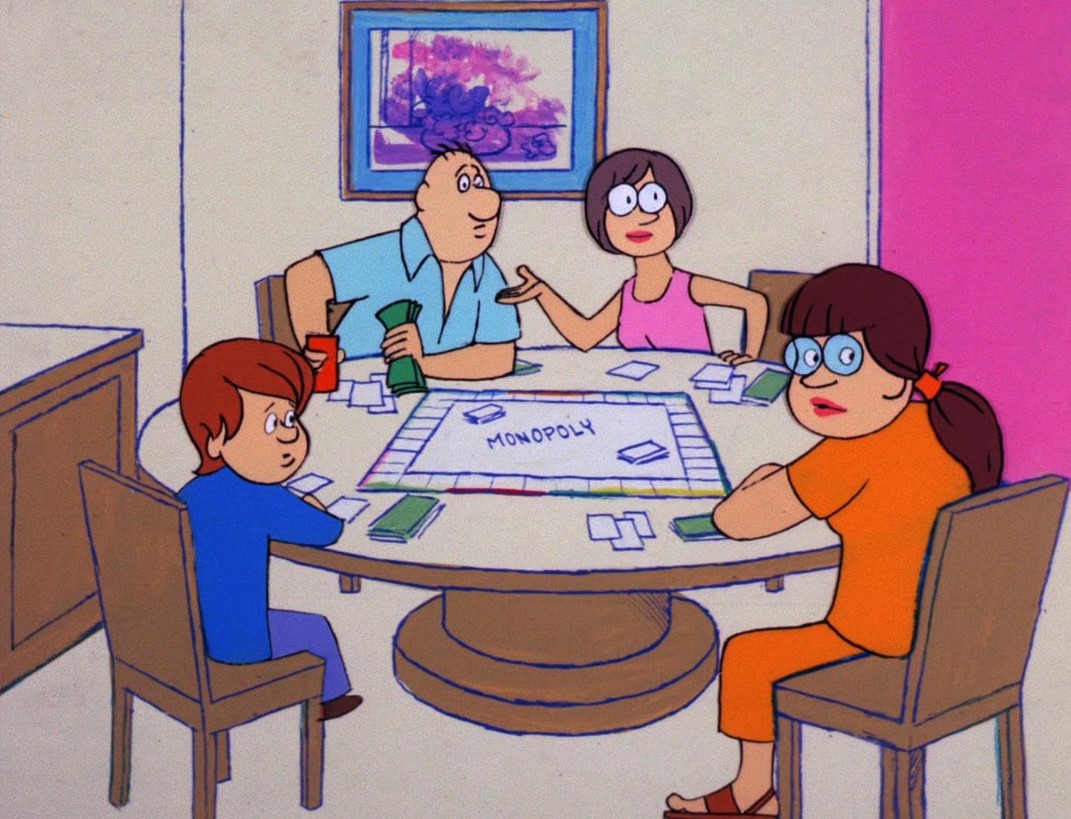
Unfortunately, I misjudged the power that cartoons had to lull parents into a false sense of security. The minute they saw this funny, ever-so-slightly adult animated sitcom, they immediately froze up, and refused to watch it again. They didn’t forbid me to watch it, but they weren’t too happy about it, either.

And frankly, I was puzzled by their reaction. As a family, we watched All in the Family with no problems, but translate some of those same concerns into bright, colorful, seemingly innocent cartoon form, and Mom and Dad started to frown. I didn’t understand at the time that the vast majority of mainstream cartoons had never touched on these subjects before (obviously, I’m not talking about underground stuff like Fritz the Cat, which, as curious kids, we were dying to see at the drive-in).
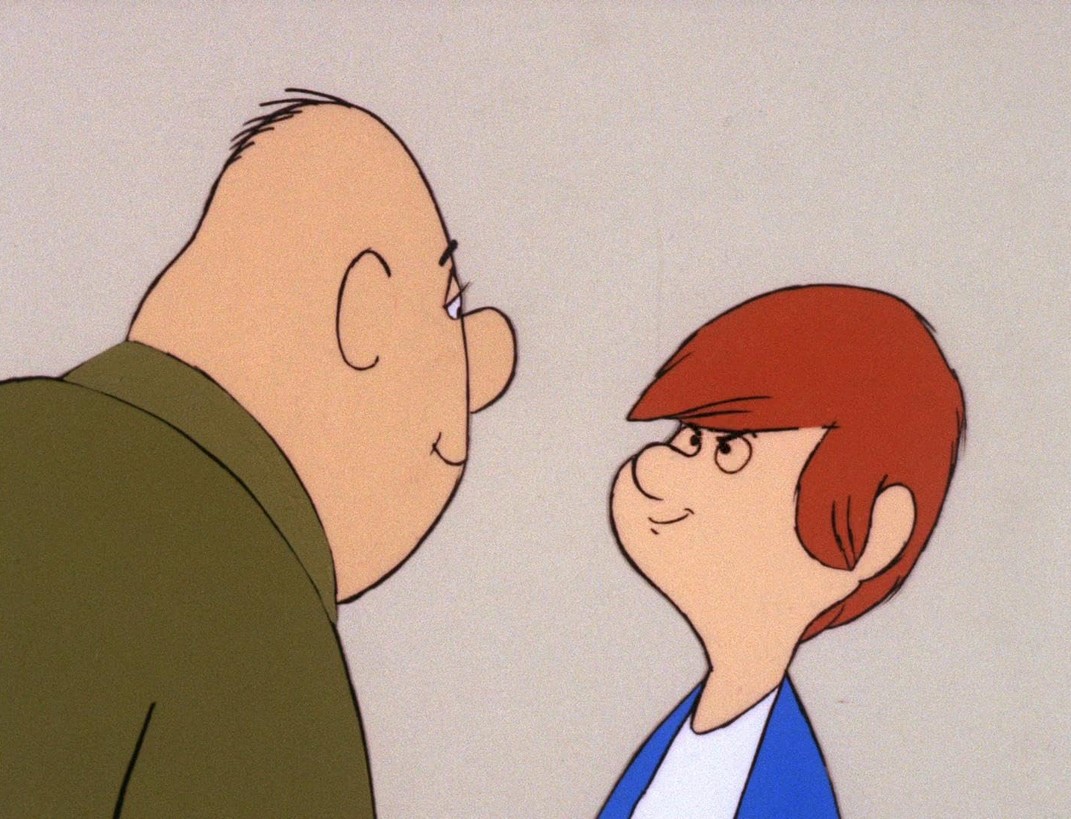
Cartoons, to my parents, were supposed to be our safe havens from the cares of the world, where they could dump us for hours in front of the tube and forget about us without worry. When they saw the same tensions that were occurring in our own house acted out in a stupid cartoon, they just shut down. How times have changed, huh?

Seen today, anyone can appreciate the relative daring that went into H-B’s Wait Till Your Father Gets Home. And by “daring,” I’m referring to its concept: a funny, flip, slightly suggestive sitcom that tackled some rather controversial issues occurring in the world at that time.

Now let’s be clear right off the bat; this isn’t Family Guy. I would suspect most kids and anybody under thirty or so would find Wait Till Your Father Gets Home exceedingly tame by today’s ribald, vulgar standards. Thirty years of ever-increasing taboo-breaking television have dulled most younger viewers to earlier TV milestones.

And that goes for me, too, in my own time frame; I still can’t get my head around the fact that Lucy couldn’t say the word “pregnant” on her show. That being said, Wait Till Your Father Gets Home is still a surprisingly funny show, with a admirably laid-back execution, an innovative production design, and clever writing that holds up well after 50+ years.
The premise of Wait Till Your Father Gets Home is as simple and stylized as its production design. Harry Boyle (voice talent of Tom Bosley) is the harried middle-class head of a rapidly changing family. His two older kids are a constant muddle to him. Chet (voice talent of David Hayward) is a twenty-two-year-old college graduate who plays at being a hippie (he lectures down at the “ghetto” twice a week, before coming back to the safety of Harry’s couch).
RELATED | More 1970s TV reviews
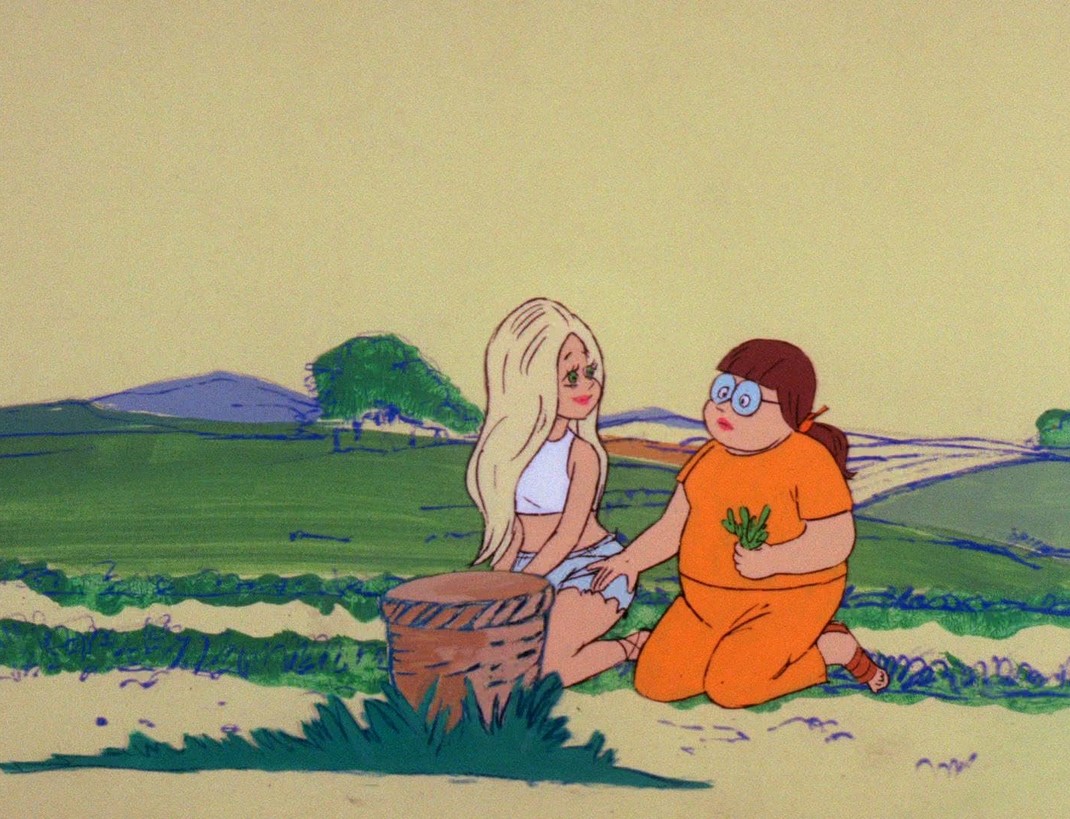
Alice (voice talent of Kristina Holland) is the overweight daughter who’s constantly chastising Harry for all his perceived prejudices and shortcomings. Harry’s youngest son Jamie (voice talents of Jackie Earle Haley, Willie Aames) is always there to back up his Dad…provided there’s monetary compensation in it for him.
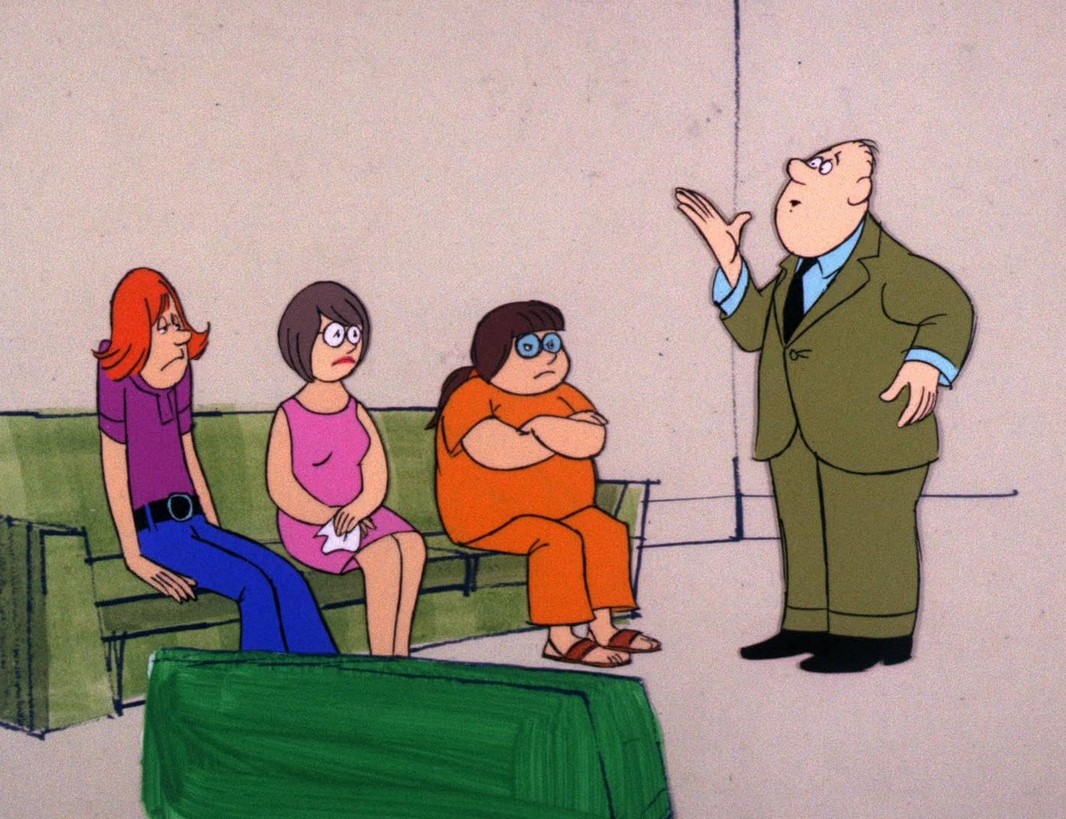
And Irma Boyle (voice talent of Joan Gerber) is Harry’s wife, who can’t seem to decide which side of the fence she should be on. Filling out Harry’s extended family is Ralph Kane (voice talent of of the incomparable Jack Burns), Harry’s ultra-right-wing bigot neighbor who is constantly on the alert for invading Communists, minorities, or anyone who doesn’t look or act or think exactly as he does.
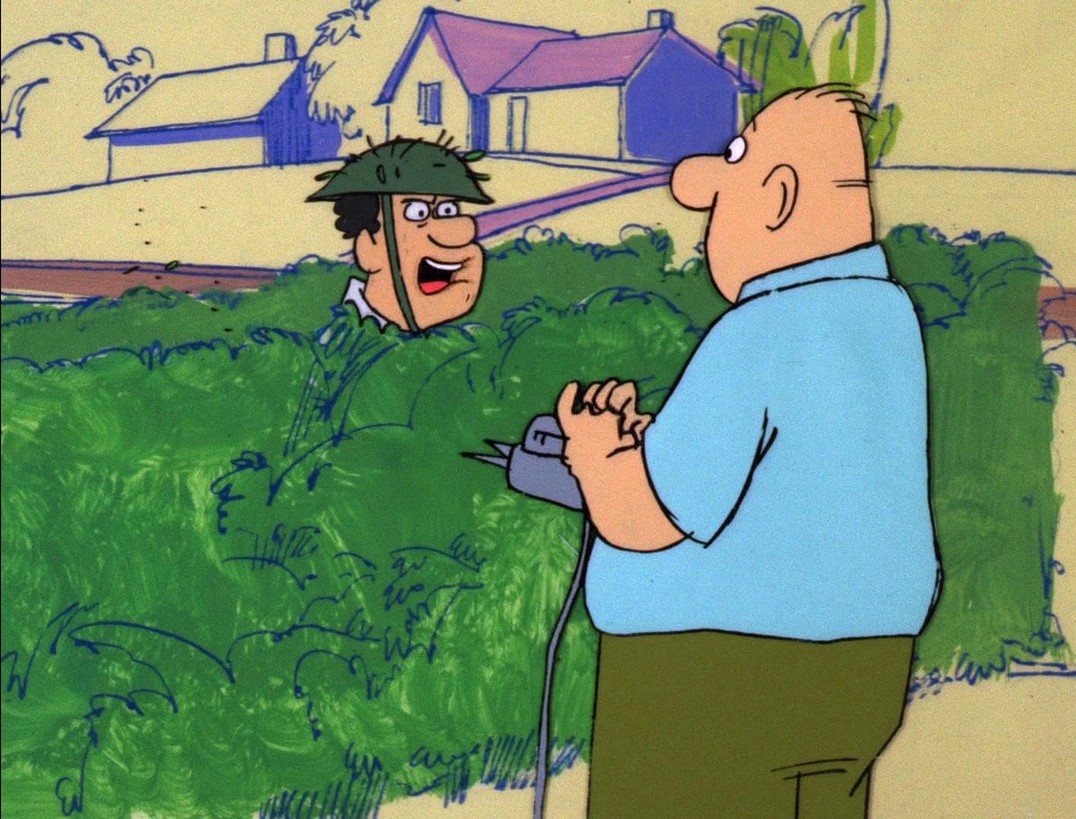
Each episode, Harry comes home from running his small business to find his family embroiled in some minor crisis that somehow always manages to backfire on Harry. Politics are discussed, traditions are evaluated, and new ideas are put forth until everyone agrees that the best possible course of action is take the middle ground and just get along. Everyone, that is, except Ralph.
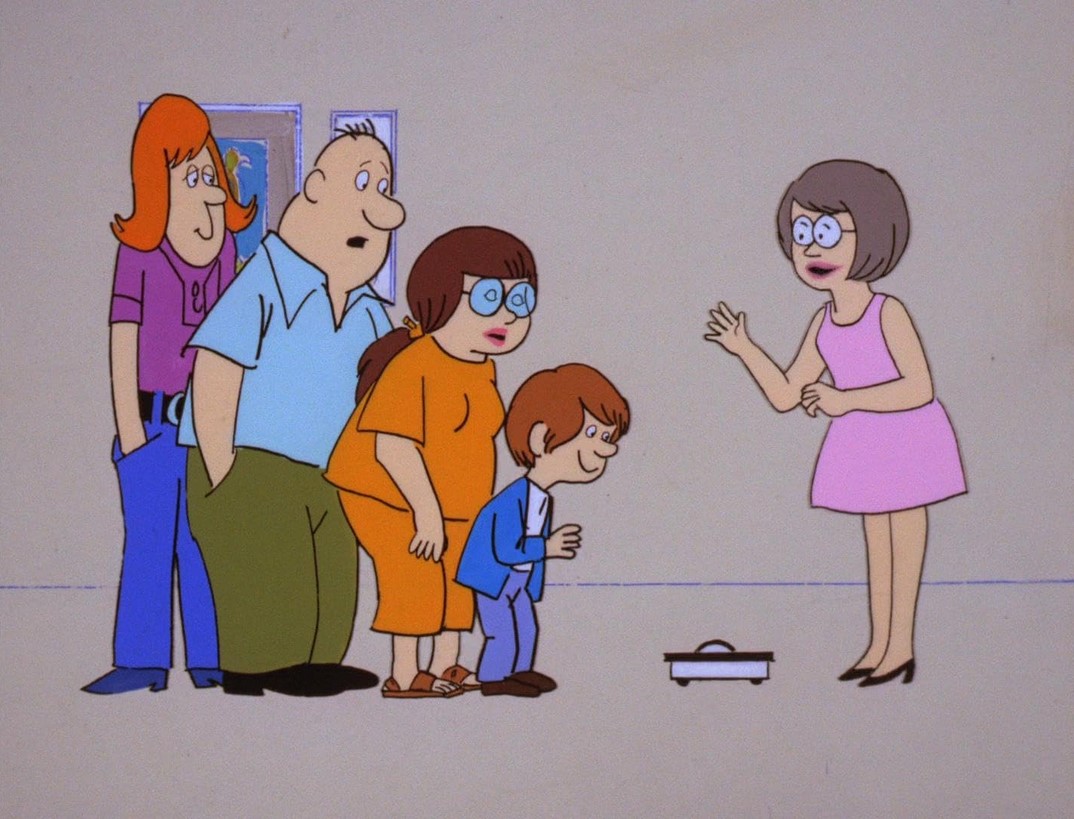
Quite often, Wait Till Your Father Gets Home is described as some kind of battle between “right wing conservative” Harry and his “radical” kids Chet and Alice. Perhaps that’s how fans remember it; after all, it’s been some time since it was on (if if was ever re-run, I’m unaware of it). But what struck me about Wait Till Your Father Gets Home is how even-steven most of the discussions are in the series.
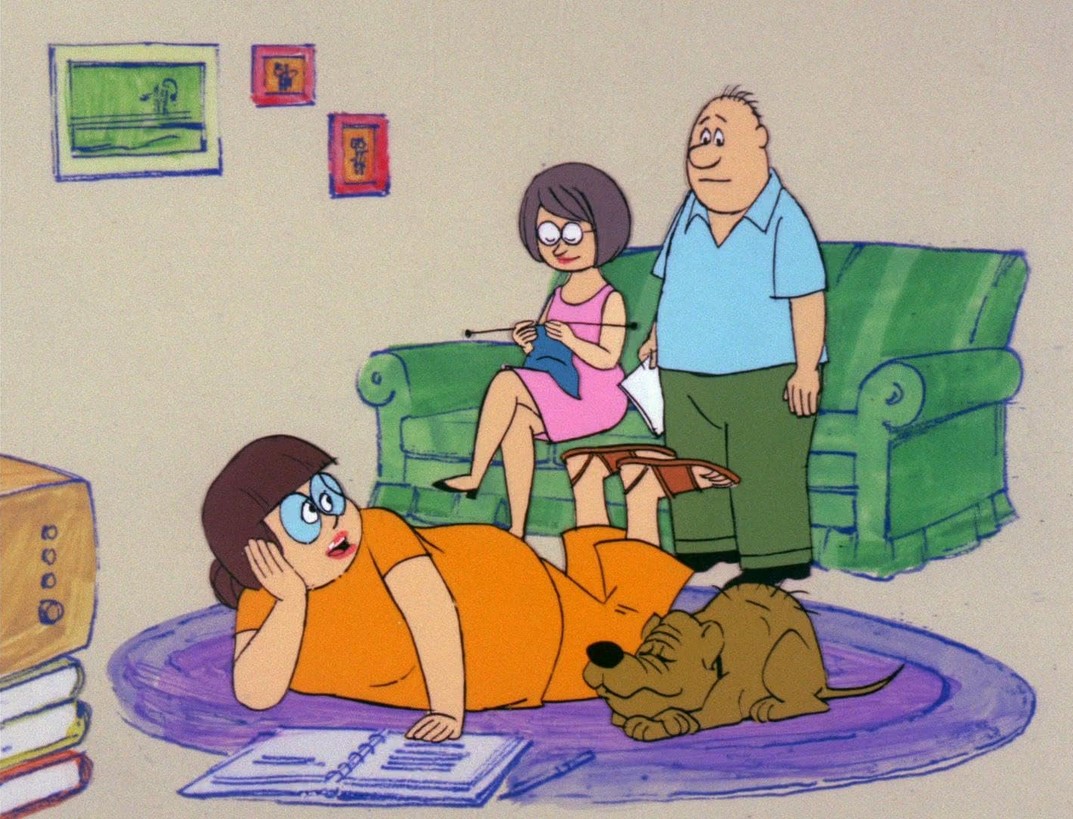
Harry, far from being a reactionary, is basically a nice guy, a traditionalist who can’t for the life of him understand the changes that are going on his world. Most of the comedy comes from other characters misunderstanding him—or downright accusing him of prejudices he doesn’t hold—and his frustrated efforts to have his own middle-of-the-road opinions heard (that’s why the implied threat of the show’s title and theme song never made much sense to me).
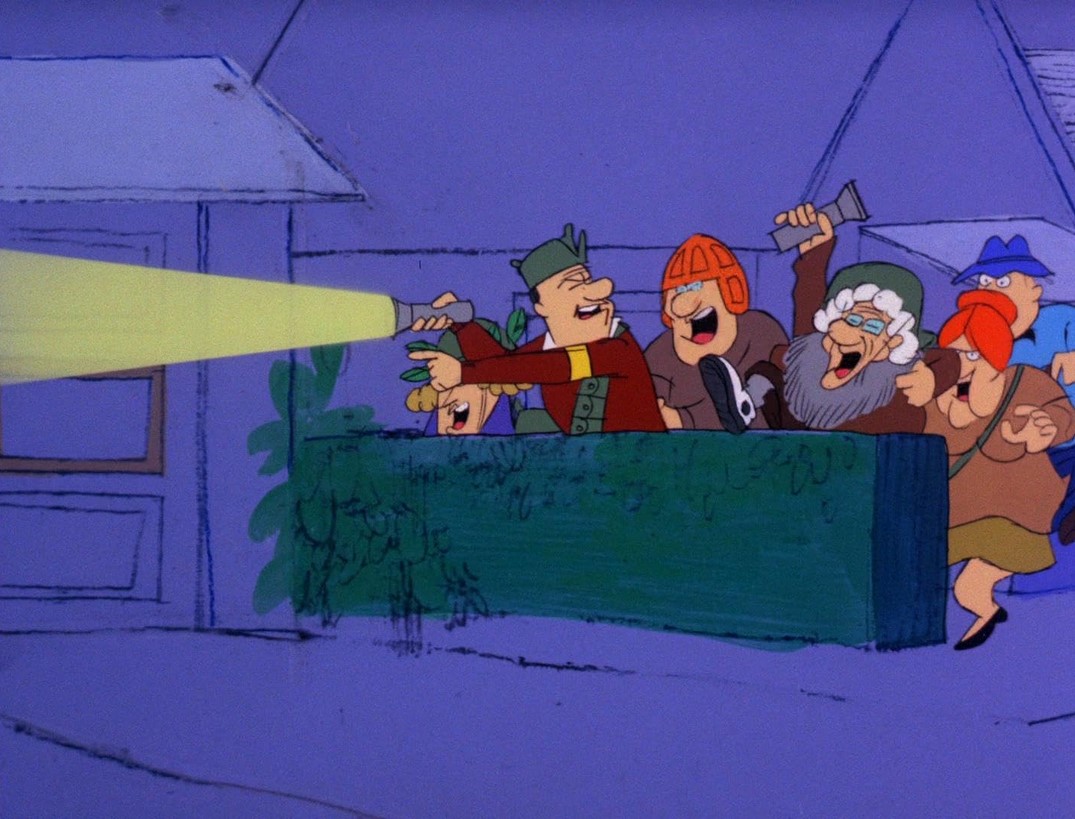
The kids, though sporting then-fashionable rebellion against their elders, hardly come off as radicals. Chet seems in his own world, most of the time; Alice is the instigator of most of the accusations against Harry, and even then, she usually comes around to seeing Harry’s point of view, just as Harry does in turn with his kid’s beliefs. Despite all the teases and suggestions that Wait Till Your Father Gets Home is going to be some kind of radical attack on accepted social mores, it ultimately comes off as fairly conventional in its ideals.
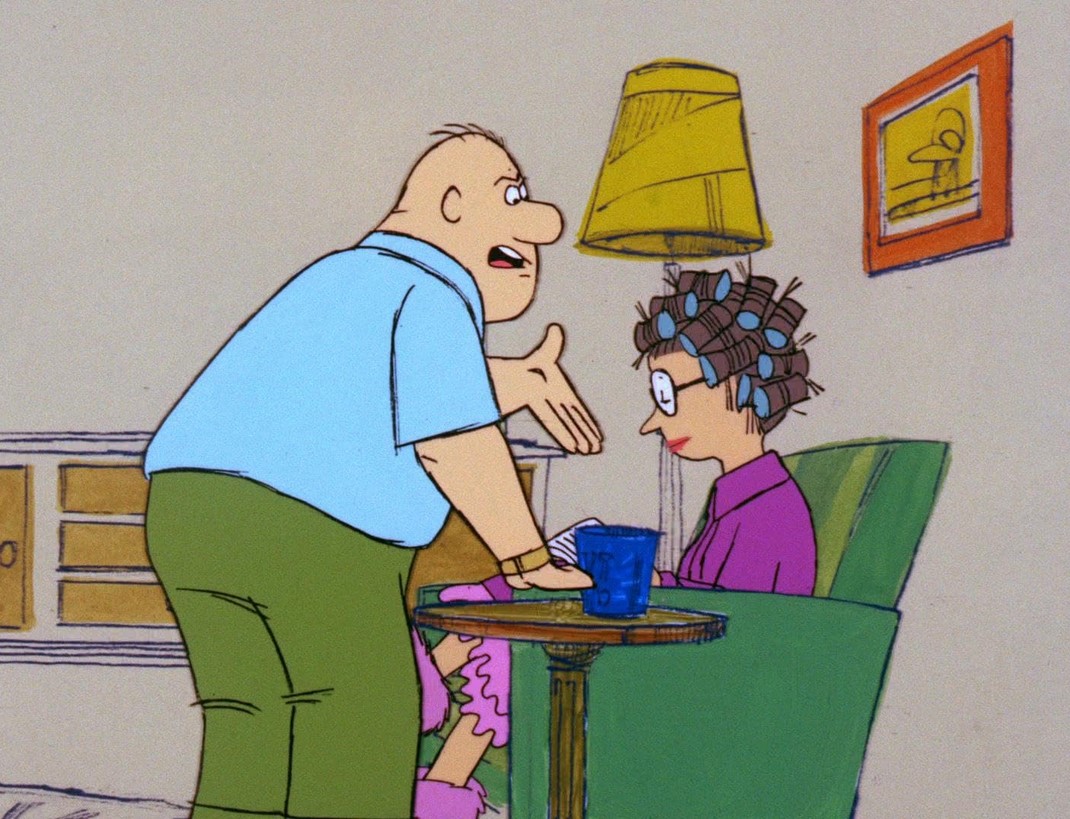
Even the extreme characters in Wait Till Your Father Gets Home; specifically wild bigot neighbor Ralph Kane and his vigilante group, wind up being softened by the comedic elements of the series. Ralph, a full-scale racist, spouts some funny lines (voiced by the truly hilarious Jack Burns) that will make today’s cornered, on-the-run woke hydrocephalics run screaming for their latest Twitter outrage (of course, if Ralph wasn’t white, and you switched the colors, his ridiculous racist rants would be called, “the truth”).
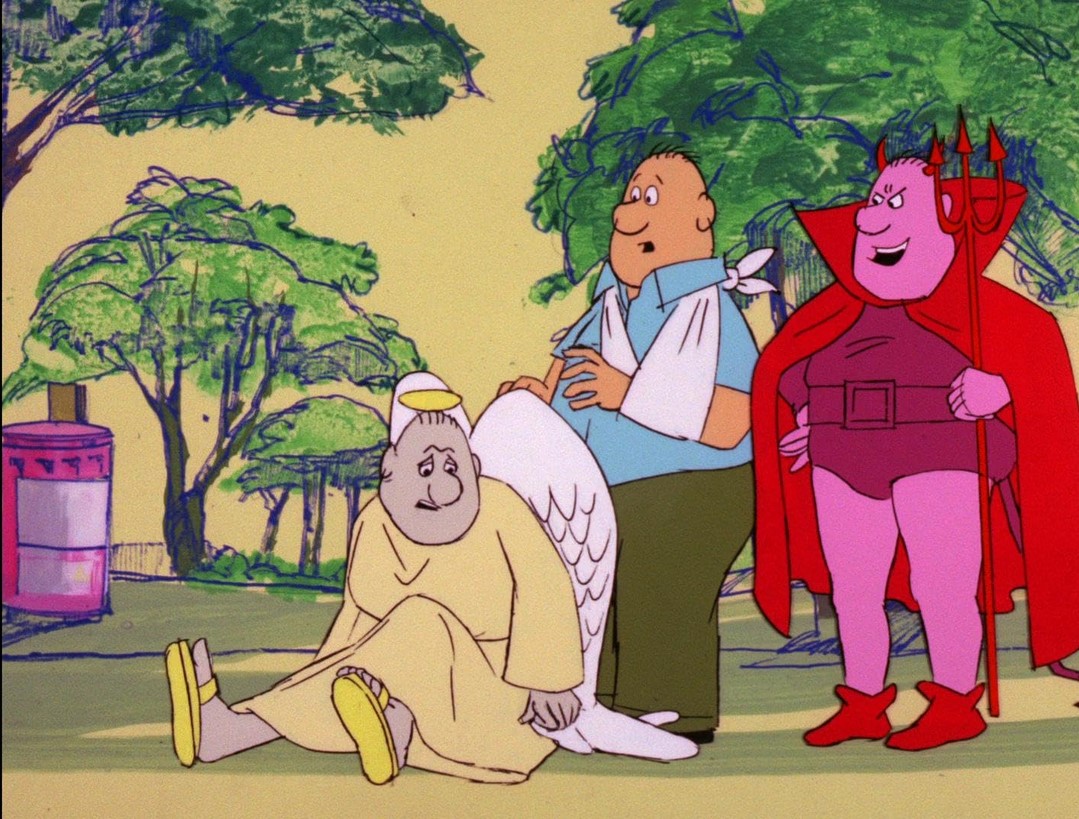
But clearly, the Ralph character is set-up as a comedic foil for Harry, to illustrate how mild and good natured and essentially fair Harry is. It is satire, after all. The creators and writers of Wait Till Your Father Gets Home achieve this effect neatly by having Ralph’s greatest worry being the Communists infiltrating the U.S.—a notion in 1972 that seemed—we were strenuously told over and over again until we believed it—ridiculously passé and silly.
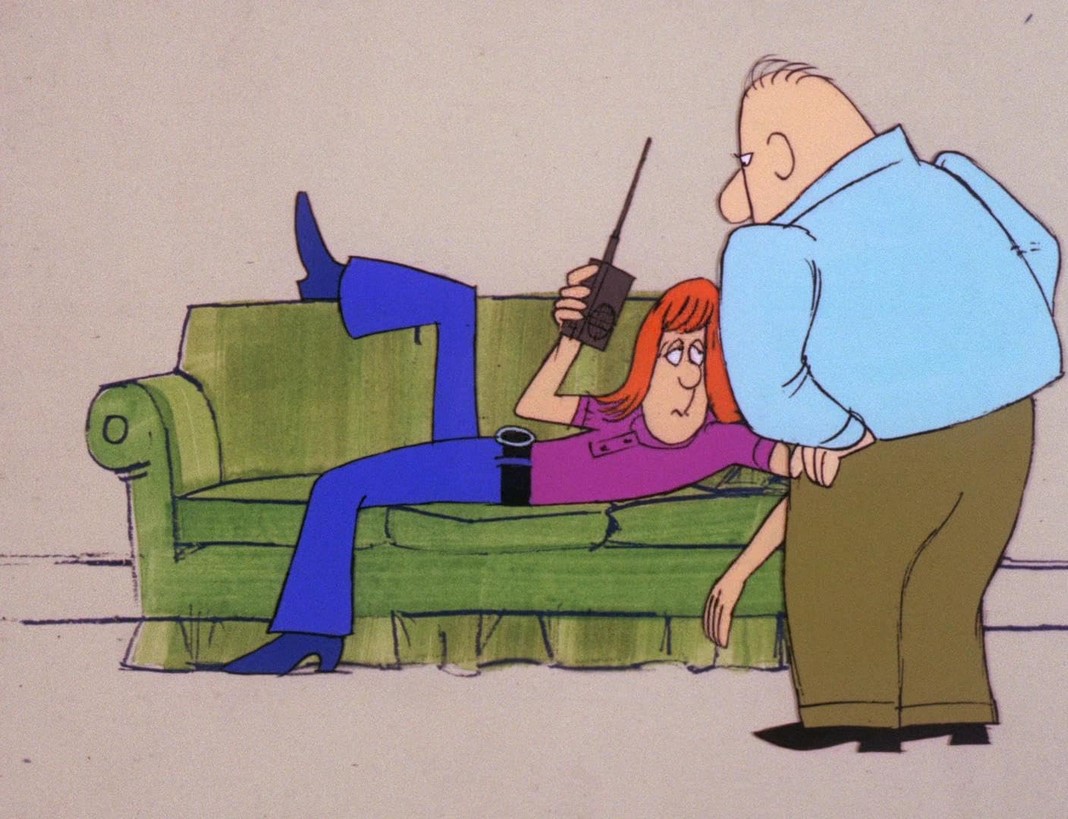
But Wait Till Your Father Gets Home doesn’t save the satirical barbs just for the conservative targets; the so-called “revolution” that was coming to America in 1972 gets its fair share of skewering, too. Liberal sacred cows of 1972 get jabbed, as well, including communes, hippies, nudists, draft-dodgers, welfare, “self-expression,” feel-good adultery, and no-guilt pornography all get razzed in Wait Till Your Father Gets Home.
RELATED | More cartoon/animation reviews
Chet is probably the best example of Wait Till Your Father Gets Home‘s wide-ranging irony. The closest thing to a hippie on the show, this free spirit talks the talk, but he walks the walk at home, frequently on the couch, without an ounce of ambition, while all his considerable bills are paid by Mom and Dad (not exactly an unfair portrait of most of the people I knew who called themselves “hippies” when I was a kid).

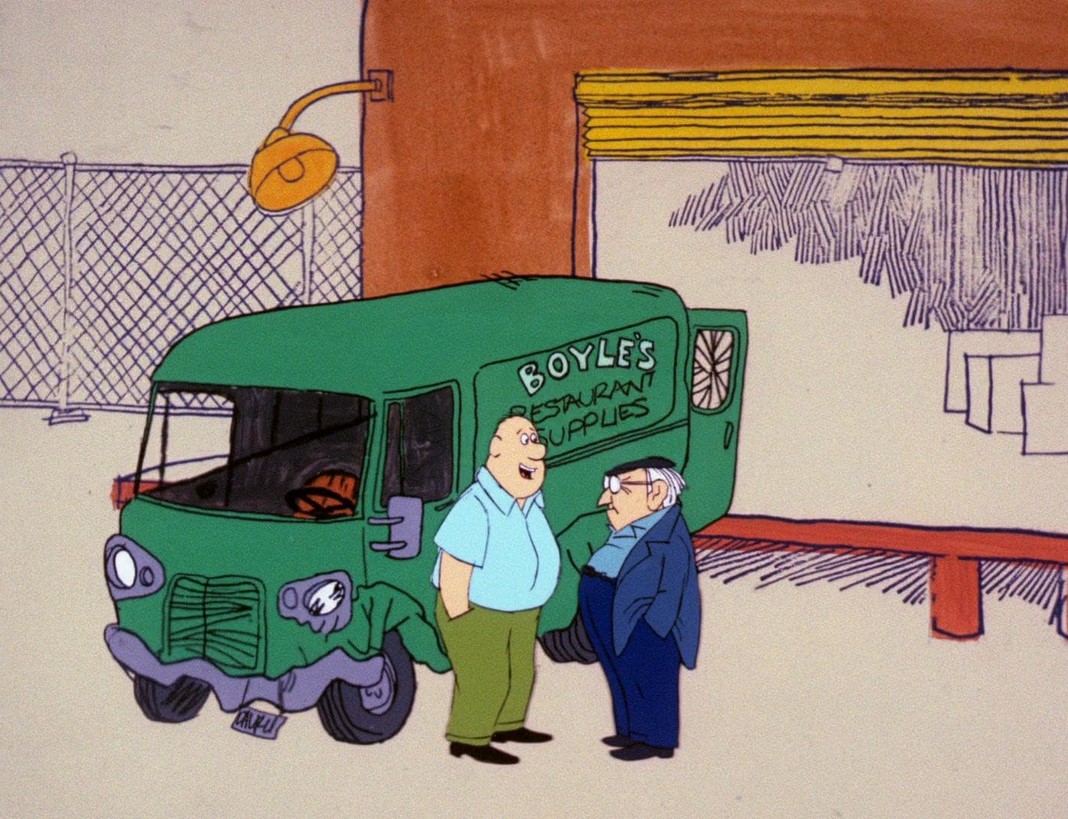
The episode Help Wanted clearly shows the series’ willingness to play fair when it shows the insanity that comes to Harry when everyone wrongly assumes he’s a bigot, demanding that he hire a minority for his new delivery driver. Advocacy groups from every walk of life inundate Harry while his family berates him for his non-existent prejudices—until he finally hires back his old driver: an elderly Jewish man who’s constantly smashing up the van.
Anybody tuning into Wait Till Your Father Gets Home just to watch Harry “get his,” like they regularly did for Archie’s weekly comeuppance on All in the Family, were probably laughing at their own self-portraits, too. And that’s really the key to Wait Till Your Father Gets Home‘s success: it’s still funny.
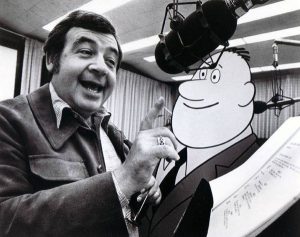
Produced by H-B regulars (and writers for the similarly-toned Love, American Style) R. S. Allen and Harvey Bullock (old pros who wrote for everything, including The Andy Griffith Show), Wait Till Your Father Gets Home has some deftly timed give-and-take jokes and dialogue that play soft and easy with the viewer. For a supposedly ground-breaking show, it’s pretty genial in its humor, and all the more welcome for that tone. Some may hate that laugh track (seriously: fuck off), but if anything, it gives Wait Till Your Father Gets Home even more of an “established” sitcom feel (to the majority of young writers who now wear the snobbish “I don’t need a laugh track to find the jokes,” badge with elitist pride, I respond, “Well la di da, Mary!” Aaaaandddd…cue the laugh track).
Another pleasing aspect of Wait Till Your Father Gets Home is the stylized approach to the animation. Veering away from the detailed look of say, a Johnny Quest Hanna-Barbera, Wait Till Your Father Gets Home incorporates the blobby look of the 70s magazine cartoon. The characters were designed by Playboy regular Marty Murphy, and further stylized by H-B genius, Iwao Takamoto.

Discarding all but the most basic identifiers for the backgrounds (a cost-cutting measure, too, no doubt), scenes appear often to be floating in mid-air, with only a couch or a table in the background to give perspective to the characters. It really lightens up the show, giving it a clean, abstract look that fits surprisingly well with the laid-back vocal tracks (not to just single out Jack Burns, “everyman” Tom Bosley is perfectly cast at the resigned Harry). Cool to look at, and fun to listen to, Hanna-Barbera’s groundbreaking Wait Till Your Father Gets Home is a bright spot in H-B’s sometimes iffy ’70s output.
Read more of Paul’s TV reviews here. Read Paul’s film reviews at our sister website, Movies & Drinks.
 Drunk TV
Stay well, Paul. I am, as you can guess, an admirer for decades.
Barry
LikeLiked by 1 person
Thank you, Barry. It’s been quite rough, honestly…but I’m hanging in there. You keep well, too, Barry!
LikeLike
This ran for years and years in Canada in the ’70s and ’80s on Global Television on Saturday afternoons.
LikeLiked by 1 person
Well, I was intending to prove that I remember this show by typing out the lyrics to the opening theme, which I also remember, but then common sense made me check to see if the theme is on YouTube, and it is, so that would prove nothing. I do remember the show, and I remember the lyrics without help from YouTube, I swear!
LikeLiked by 1 person
Paul, I do remember watching this when I was in fourth grade. I am very sorry to hear about your health issues and do truly hope you are able to be well again.
-Guy K
LikeLiked by 1 person
That’s very kind of you, Guy. Thank you. I’ve been surprised: I’ve received more, “Get well” wishes than, “I hope this finally kills you,” regards. It’s heartening.
LikeLike
Your reviews — and your views — are like a voice in the wilderness. Always look forward to them.
-Guy
LikeLike