
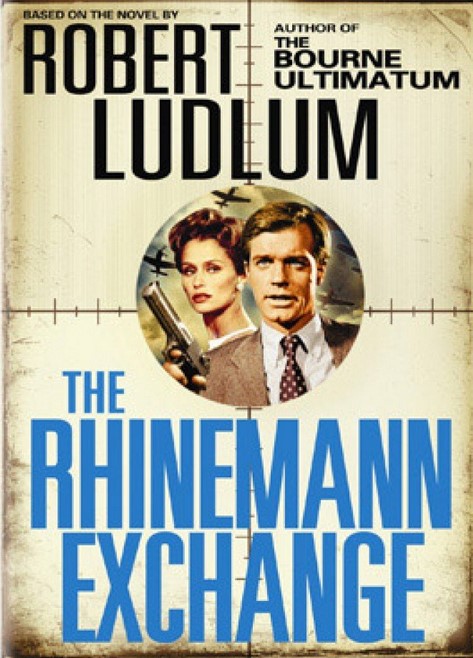
Okay, okay. I know I wrote months ago (wait…was it years?) that I would finish off my look at the NBC Best Sellers “series of mini-series” from the 1976-1977 season, with a review of The Rhinemann Exchange, based on the Robert Ludlum WWII espionage thriller, starring Lauren Hutton, John Huston, Roddy McDowall, Claude Akins, Vince Edwards, Jose Ferrer, Rene Auberjonois, Larry Hagman, Werner Klemperer, Trisha Noble, and that pedo. I’m also fairly certain that I told you people that I was experiencing actual physical discomfort in doing so, not so much because I would have to write about Stephen Collins (we’ll dissect him later), but because The Rhinemann Exchange is so cosmically dull, so existentially dead, that I honestly don’t know—I mean right now, sitting here—what the hell I’m going to say about it.
By Paul Mavis
Maybe this is a good dilemma, if I choose to look at it that way. After all, I’m known for writing reviews about movies and shows that take longer to read than to actually watch said movies and shows. Maybe this will be a needed course correction, like a dose of the salts, to get me back in line. A Drunk TV P.I.P.. Now I know my editor won’t be pleased; he’s of the opinion that the longer the review, the more tempting it is to the search engine algorithms out there. Maybe so. But then again, this is the guy who tried to sell me for crack (and succeeded), so…he gets what he gets.
Click to order The Rhinemann Exchange on DVD:

(Paid link. As an Amazon Associate, the website owner earns from qualifying purchases.)
God…I can’t face this. Alright…It’s Vienna, 1939 (I’m not going to make this). Rich playboy David Spaulding, in town for polo (yep), gets a casual dressing down from his wealthy father and then beds his old man’s hot assistant (seriously…why didn’t Trisha Noble have a huge career?). U.S. Army Intelligence colonel Edmund Pace (Larry Hagman) sees that David is a “game player,” who’s smart and intelligent and tough—so’s how’s ’bout working for Uncle Sam?

It takes David’s dad and Noble getting blown sky high in a hotel bombing to convince him, so it’s covert operative training time back in Fairfax, Virginia. Unfortunately, David’s Achilles’ heel is…he’s too sportsmanlike, too gentlemanly, in a knife fight. That’s going to cost him later on. After training, he’s assigned his first post: Madrid, with a military attache cover to connect up with the Spanish underground (wake up, readers!).

There he meets his associate, cold-as-ice operative Geoffrey Moore (Jeremy Kemp), while they stay at hot peasant woman Anna’s (Isela Vega) hovel. When David is almost killed in a trap (again…he’s too nice), Anna nurses him back to health just enough to have sex with him and die in another attack by the Germans. God…war is hell.

Meanwhile, back in the Fatherland, Colonel Klink (Werner Klemperer) says Germany needs industrial diamonds for their secret weapon! Funny that, because America has all the industrial diamonds the Nazis need; what G.I. Joe needs are some high-altitude gyroscopes that actually work…which the Nazis have plenty of! How’s ’bout a swap, then, proposes connected fixer Claude Akins?

Okay, so you get where this is going, right? Besides, this mini is over four hours long, and if you’ve ever read Ludlum, there’s a minimum of 127 double and triple crosses to the plot before everything works out the way it would have after only 2 double crosses.
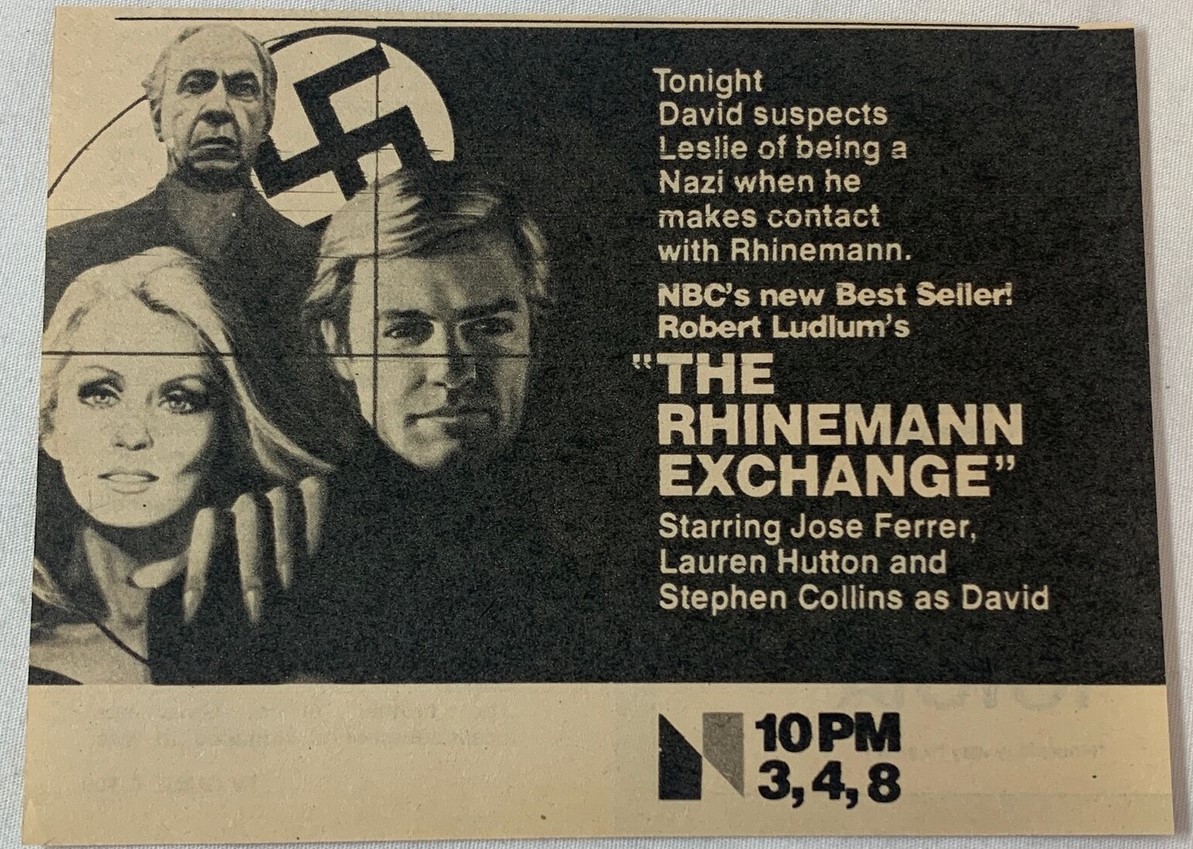
Of all the NBC Best Sellers minies, The Rhinemann Exchange is by far the worst offering. Its excessive length made interminable by endless, endless dull exposition, The Rhinemann Exchange offers almost no WWII espionage thriller set pieces to break up the yakking. True, the scripter, Richard Collins (lots of Bonanza and Matlock episodes) sticks close to Ludlum’s story, but there’s a difference in enjoyably sinking into Ludlum’s dense prose as you heft one of his door-stoppers, as opposed to watching static head-and-shoulders square boxes of pictures reciting all this verbosity.
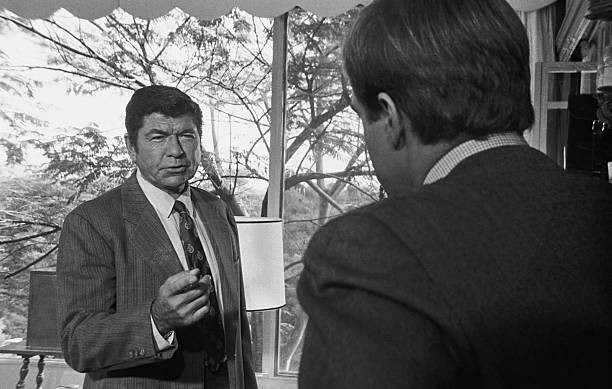
A TV thriller has to move, and not just with action (although that should have been a given here, considering the plotline). Those exposition scenes, no matter how drawn out, could have engaged us if the director, Burt Kennedy, wasn’t thinking about the next Western he might shoot, or the actors had anything on the ball. Alas, we’re stuck with inconsequential, lightweight, utterly bland Stephen Collins to anchor this slog.

You could tie yourself up in knots trying to figure out how, exactly, you should approach writing a review that so prominently features an actor who is now the subject of so much disgust and scorn. After all, what do you do when trying to separate the artist from his work? It’s an age-old dilemma that nobody is ever going to figure out, probably because there is no solution. Just be glad you don’t really know the artists you like…or they may turn out to be scumbags like Collins. And then where are you, when you’ve got a goddamn deadline?
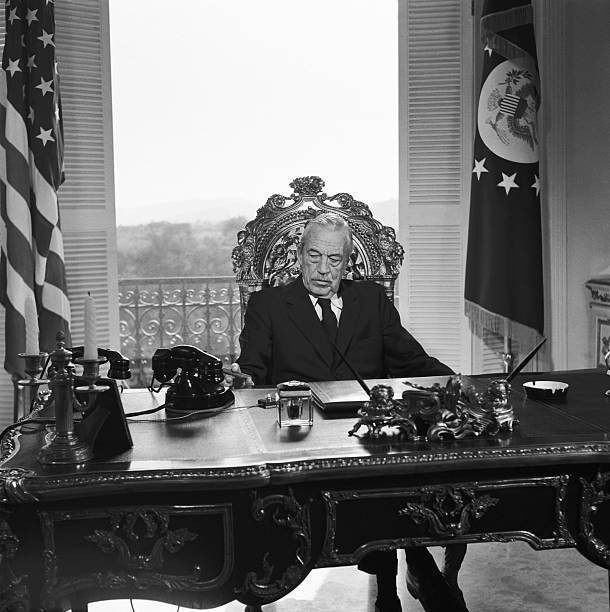
Luckily, he’s easily dismissed here just on his thesping effort alone. A few years before the scandal landed, I wrote about Collins, reviewing his fun Tales of the Gold Monkey series. And while I enjoyed his turn as a TV-lite version of Indiana Jones, it’s not hard to see “left-handed compliment” flags popping up left and right in the review.
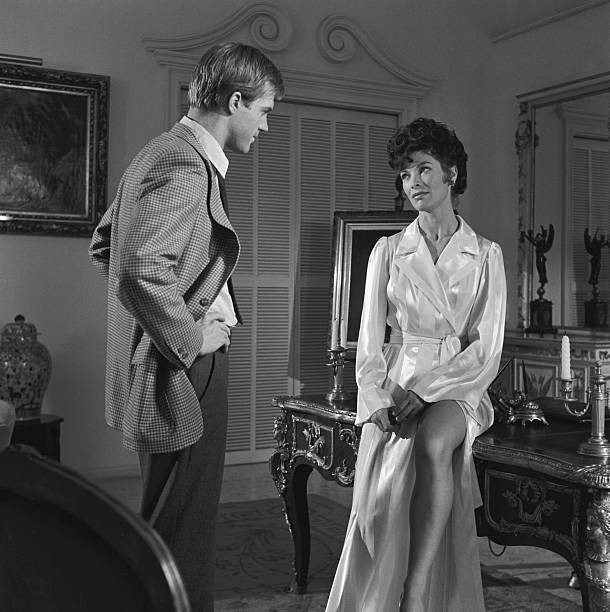
Unfortunately, there’s no such redeeming superficiality to his turn here. Making Roger Moore look like Paul Scofield by comparison, Collins appears to be drugged, sleepwalking through The Rhinemann Exchange‘s four draggy hours as if he’s not quite aware he must be forceful and charming and deadly and all those things undercover spies must be in our fantasies. It’s an utterly banal performance, and one that he gave over and over and over again in countless movies and TV shows.
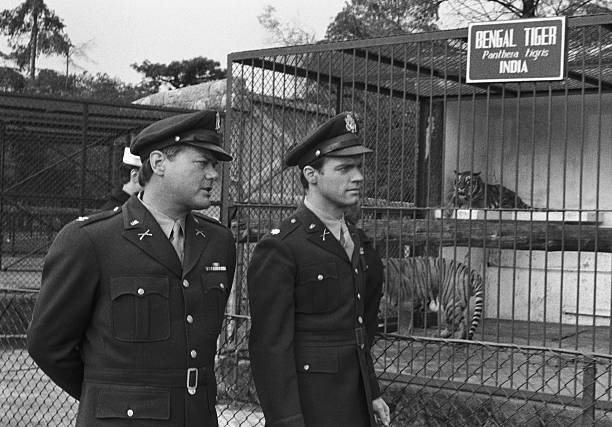
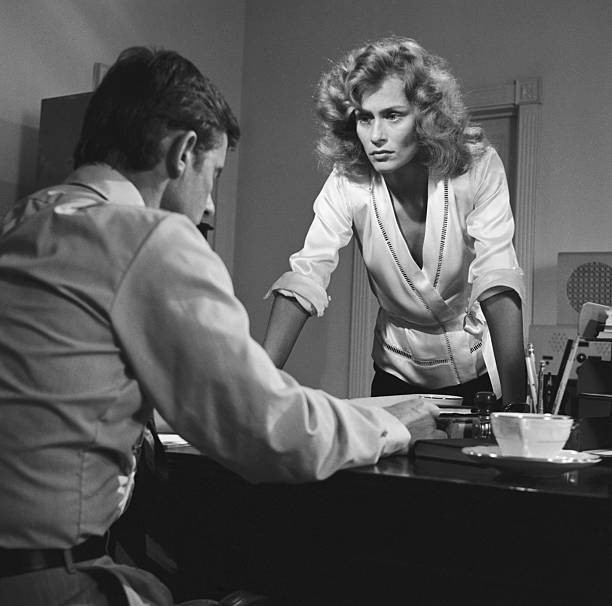
At least the supporting cast is up to speed…even if their dialogue isn’t. Lauren Hutton, always a favorite (and never given anything in her career to build on the promise she showed early on—particularly in Little Fauss and Big Halsy), is nicely cast as a duplicitous vixen. However, her sexy rasp of a voice is countered by that dental cap she used sometimes (leave the gap, Lauren—it’s you). Larry Hagman, just months away from a career revival into TV superstardom on Dallas, does well with the tough intelligence officer role he’s given, while Roddy McDowall does what he always does (thank god): steal every scene he’s in with his patented confused double-take, bitchy schtick. I always enjoy seeing Jeremy Kemp, and he’s fine here…but it’s a role he did too often, and a sketchily-written one, at that. The rest of the pros do their jobs, as expected.
Premiering on Thursday, March 10th, 1977, I have no idea how The Rhinemann Exchange did in the ratings. Competition for the first all-important audience-hook episode over on CBS was the Jane Alexander downer, A Circle Street of Children TV movie, while ABC had the country’s 17th and 11th most popular sitcoms meeting Ludlum: Barney Miller and Three’s Company. If I was watching TV that night (and when wasn’t I?), I can bet which network I tuned into….
Read more of Paul’s TV reviews here. Read Paul’s film reviews at our sister website, Movies & Drinks.
 Drunk TV
Is that supposed to be Hutton in the TV Guide ad? I would’ve sworn it was Donna Mills, except she’s not in the cast.
LikeLike
It is supposed to be Hutton…and it does certainly look like Mills!
LikeLike