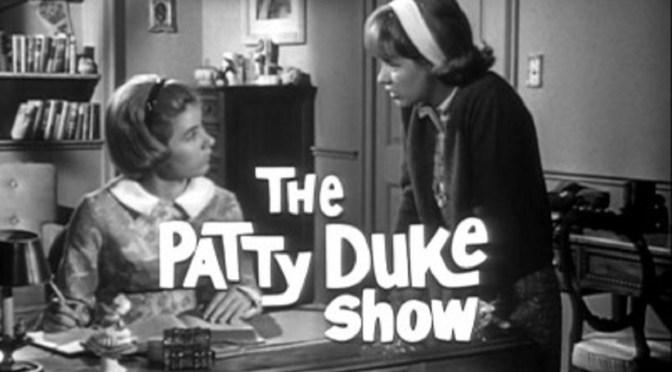
Twins no more…both literally and figuratively.
By Paul Mavis
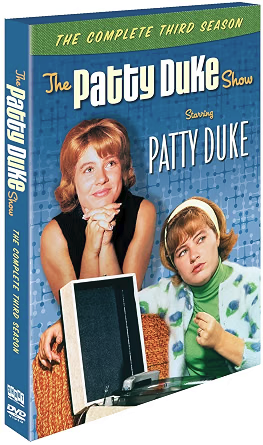
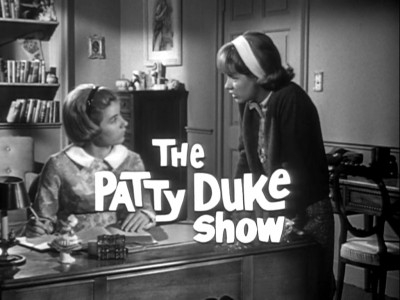
Finishing out the series, Shout! Factory, a few years ago, released The Patty Duke Show: The Complete Third Season, in a six-disc, 32-episode collection that finds the iconic boomer sitcom ending on a sustained high note―and that often doesn’t happen. The “identical cousins” bit is largely dropped this 1965-1966 go-around as changes galore make The Patty Duke Show feel kinda different from its two previous outings. But it’s still a witty, sweet (and maybe heartbreaking) time capsule from a period and place that will never come again to American television.
Click to order The Patty Duke Show: The Complete Third Season on DVD:
(Paid link. As an Amazon Associate, the website owner earns from qualifying purchases.)
I wrote extensive reviews of the first two seasons of The Patty Duke Show that looked at the show’s background and its place within the context of network sitcoms of the early to mid-sixties, so I won’t backtrack on a lot of that information (click on the “we need extra eyeballs” link, and you’ll be helping some very sad, broken people at Drunk TV West Coast headquarters).
In my review of season two of The Patty Duke Show, I discussed 60s network series and the tendency for them to stay the same in format and formula from season to season, ensuring a reliably repeatable product. However, for regular viewers of The Patty Duke Show, season three’s changes are noticeable.
Of immediate note (and not of little insignificance), that insanely catchy theme song has been rearranged, featuring a distinctive Beatles guitar twang that lets everyone know this is America, post-British Invasion. High-schoolers Patty and Cathy are getting older, and naturally their tastes in music would gravitate to the latest crazes―just like the young viewers at home.
And although not a steady theme or motif by any means, The Beatles and James Bond are referenced several times here (Richard is incredulous that Patty would willingly skip a Bond movie), giving this season a bit of a then-contemporary pop culture bounce (adding to the obvious targeting of the teen audience, appearances by Frankie Avalon, Troy Donahue―who’s terrible here―and Shindig‘s house band, The Shindogs, open the first three episodes of the season).
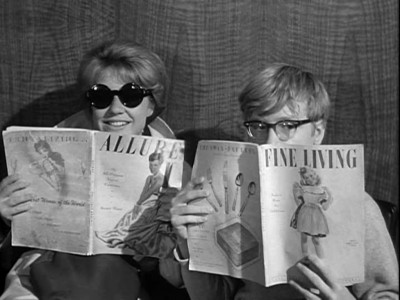
As well, with the producers finally unable to mask Patty Duke’s obvious maturation, Duke is allowed to look her age (or at least an approximation), with more flattering, grown-up hairstyles and make-up (apparently, many histories of the show don’t realize that Duke’s managers lobbed off two years from her age; she was already 19 when she began filming this season, turning 20 halfway through).
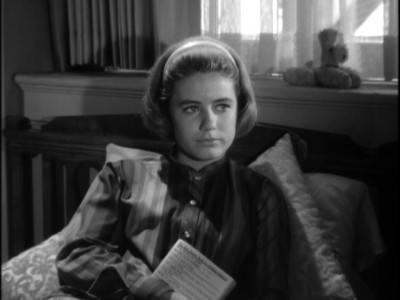
Certainly the biggest physical change for this third season are the settings, both interior and exterior. Now, I could be completely wrong here, but don’t those exterior shots of Patty’s “new” home look right out of Southern California? The show is still ostensibly anchored in Brooklyn Heights, New York…but that house and street don’t look like any street I’ve seen in Brooklyn (again…I’m no expert).
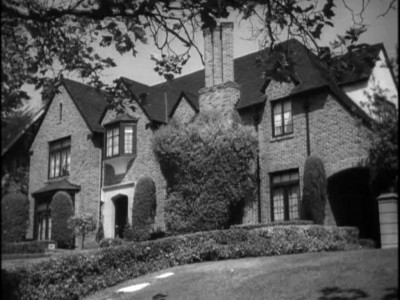
The series doesn’t mention any of these changes, but Patty has gone from living in that quaint, Georgian brownstone at the end of a waterfront street (with a distinctive New York skyline across the water), to what almost looks like Wayne Manor, complete with huge boulevards and shade trees, and bright California sunshine.
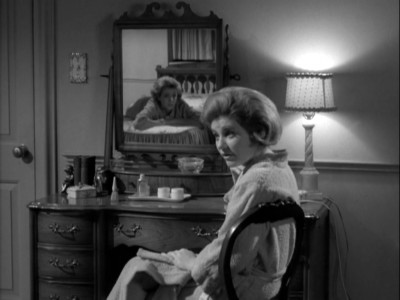
Most histories on the show recount that the series, shot in New York to take advantage of longer working hours for minors, moved to Hollywood for the last few episodes of season three, with the belief that the show would continue there for a fourth round of episodes…which unfortunately didn’t happen (even with phenomenon Batman as a lead-in, The Patty Duke Show‘s ratings continued to fall, with ABC’s 1965-1966 Wednesday night line-up no match for NBC’s The Virginian, or CBS’s killer Lost in Space / The Beverly Hillbillies / Green Acres / The Dick Van Dyke Show block) .
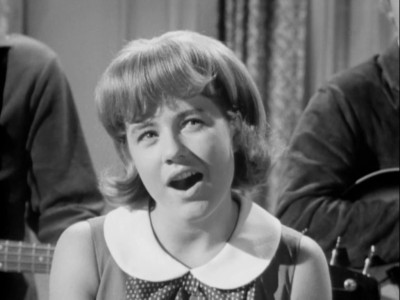
ABC, as the story goes, anxious to get the production closer to home base, pressured the just-turned 18-year-old Duke to go along with the move, which she acquiesced to at the last minute. But seeing as how Duke was already 19 at the halfway point of season three (and thus emancipated from not only her managers, but also the restrictions of child labor laws), wouldn’t the move to California occur sooner, at the end of season one, or at least sometime during season two?
It sure looks that way with the location work here (which is present from the very first episode―so how did they do that, unless they were shooting second unit in California all along?), as well as with the completely new interior sets, and the noticeably “different,” more California-sunny sitcom feel of the cinematography and lighting (see my first review for more background on that).
There’s no break in the seamless visual look of the show, either…and that’s tough to do, shooting in one facility on the East Coast, and then another on the West Coast. Again, this is all speculation; for all I know, that street and that house are in the heart of Brooklyn Heights and I’m dead wrong.
I mention all of this because this third season of The Patty Duke Show has a noticeably bouncier, traditionally Hollywood sitcom-y atmosphere to it. Looking at it, it just feels like something out of Hollywood at the time, unlike the New York-shot first and second seasons, which have an unmistakably more sedate, enclosed, “darker,” more sealed-off feel. The entire production design is more light, more expansive.
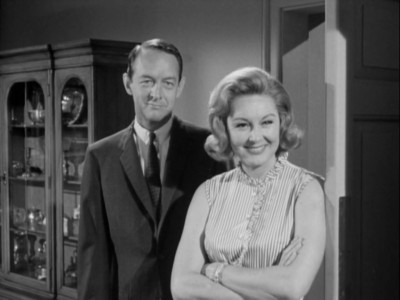
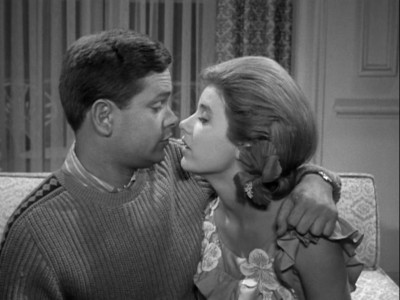
Here, Richard no longer lives next door; he has to drive from wherever he now lives, opening up the show’s plot lines for more movement of the characters (speaking of the “teens” on the show getting older, Paul O’Keefe looks like he grew a foot during hiatus, and Richard’s Eddie Applegate looks every bit the 30-year-old he was at this time). Farcical story constructs and broad slapstick keep the show really ticking along this time around as Duke noticeably seems to strain even more against her teen image (and that only adds to the energy level of the episodes).
Curiously, after Cathy’s bumped-up presence from season one to season two, she’s largely relegated to the shadows again in this final go-around. One or two times we get the classic “switch” plot that has Patty masquerading as Cathy or vice versa, usually to catch Richard up in some scheme of jealous payback (Patty and the Eternal Triangle), or perhaps we might even see a rare Cathy-centric plot (Cathy Leaves Home―But Not Really).
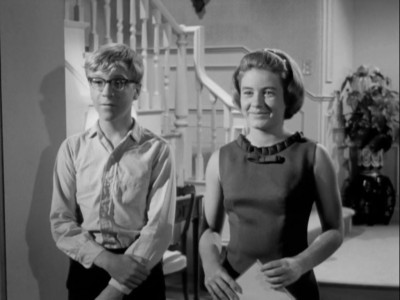
But even then, it’s half-hearted and not particularly believable (by this point Cathy still isn’t secure about her place in the Lane family?). Most of the time, she’s absent from the stories, without explanation (Patty casually mentions she’s in Paris at one point, while we scratch our heads).
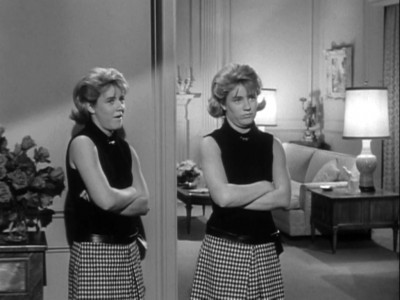
Eventually, one gets the feeling that the producers, perhaps invigorated by LaLa-Land’s assembly-line sitcom factory, just hoped to jettison the whole cumbersome, played-out “identical cousins all the way” framework, and settle down into a conventional teenage-focused comedy―with one teenager: Patty, the irrepressible, energetic one, since the Cathy character always seemed rather blah by comparison. Nobody on the production end even seems all that concerned with hiding the obvious double used for the twins (check out Too Young and Foolish to Go Steady, and see double Rita McLaughlin, full-face and clearly visible in the mirror, as Duke nonchalantly talks to her).
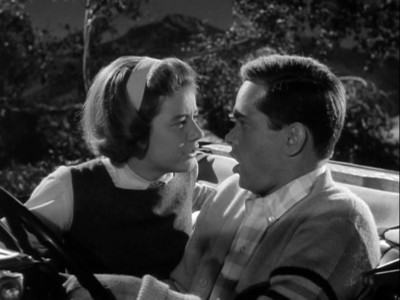
That aside, this third season of The Patty Duke Show still generates a sizeable amount of accomplished episodes. The season opener, A Foggy Day in Brooklyn Heights, is an amusingly constructed little farce of exits and entrances, with Frankie Avalon acquitting himself nicely, as usual (too bad he was stuck at AIP with terrible writers and directors).
The same can’t be said for insincere Troy Donahue, who’s just awful in the otherwise funny Operation: Tonsils. In addition to his stilted, unfunny turn here, he looks oddly roughed up, as if someone clocked him one on the side of the head―he must have known his career was in the toilet, doing this guest spot (and to add insult to injury 45 years later, Shout! doesn’t even list him as a special guest star in their episode guide―pretty sad for the once-famous heartthrob).
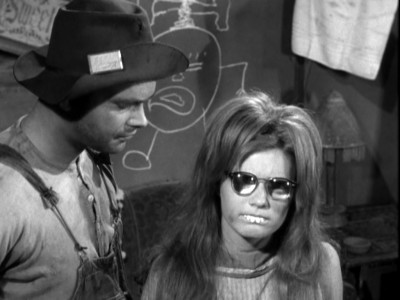
The Guest is a standard “American teenage boy/clod eating/annoying host parents out of house and home” plot, with Applegate again effortlessly droll as the slightly dim Richard. The Girl From N.E.P.H.E.W. is a fun take-off on the Bond and Man From U.N.C.L.E. craze sweeping the world at the time, while Sick in Bed gives the world its first peek at the Neelie O’Hara prototype as selfish, bed-ridden Patty drives her family nuts.
Anywhere I Hang My Horn Is Home features a nice turn by one of my favorites, Dick Gautier, who gets some laughs as he turns his stereotyped freeloader musician character into a charming, on-the-level bohemian. Do You Trust Your Daughter? is an interesting experiment with the format―it’s played as straight drama, with an absent laugh-track until the final minutes of the episode, while Fiancée For a Day features a hilarious dream sequence where Duke, costumed suspiciously like a cartoon version of Helen Keller, gets some broad laughs.
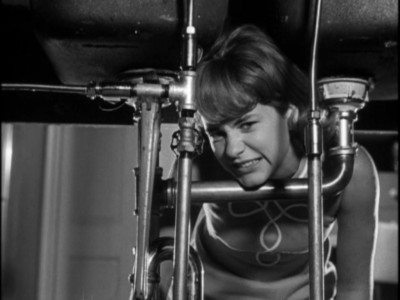
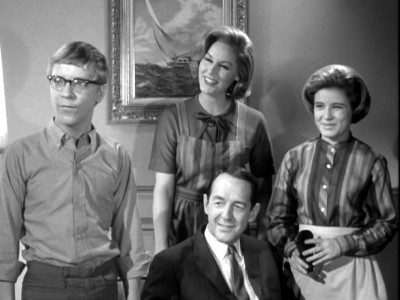
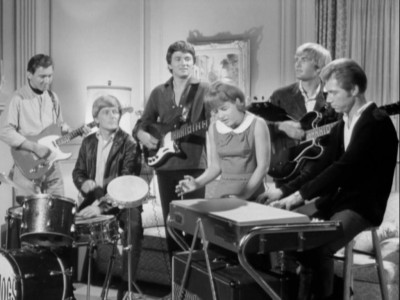
Certainly for me, the season’s best episode is Partying Is Such Sweet Sorrow, not because of any particular overwhelming merit in the screenplay, but because we’re treated to Duke’s rendition of Funny Little Butterflies, her B-side hit from her film, Billie (a little cross promotion). Backed up by The Shindogs (although I didn’t see any of those strings I hear in the song…), and with her delighted family looking on, Duke trembles her way through that addictive, touching little love song (with a hook like crack cocaine), and for me, that’s the living end, man.
That’s what this kind of expertly-produced TV fluff from this time period is all about: pure, honest emotion calculated, synthesized, and over-dubbed into polished perfection. I can’t think of a better moment that sums up this charming series.
I must be growing up,
I’d like to run and hide.
There’s something going on,
I’m all mixed up inside.
Tonight, he held my hand,
And when our fingers touched,
I felt butterflies.
Funny little butterflies.
I wonder if it shows,
This strange new way I feel.
This strange new feeling
That I simply can’t conceal.
Tonight, he held me tight,
And all the while we danced,
I felt butterflies.
Funny little butterflies.
I’m still a little scared,
It happens much too fast.
I’m still a little lost
Between what’s coming,
And what’s past.
I know it’s not a dream,
It’s lasted much too long.
Each time I close my eyes,
The feeling’s still so strong.
Tonight, I found it nice,
Just to be a girl.
I feel butterflies.
Funny little butterflies,
Inside.
(Those funny butterflies)
(Those funny butterflies)…

Read more of Paul’s TV reviews here. Read Paul’s movie reviews at our sister website, Movies & Drinks. Visit Paul’s blog, Mavis Movie Madness!…but mostly TV.

