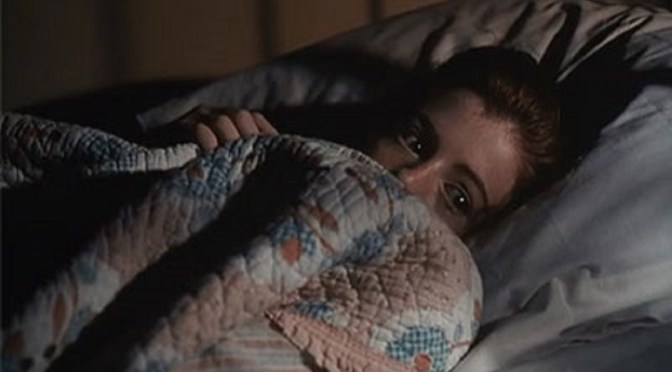
Grandma needs to take a hickory switch to Old Scratch, after all the witchery and conjurin’ and deviltry up on Walton’s Mountain this Halloween. Land’s sake!
By Paul Mavis
Yes, it’s Halloween-time here in the Great American Middle West, and you can celebrate this evil pagan “holiday” any number of ways that respect the culture unique to this area.
On the low-key side, you can throw an old-fashioned Halloween party, where the youngins have a taffy pull and bob for apples, before watching a spooky movie. Tarnation that’ll make ’em sleep good at night!
Or, on the other end, you can take your life into your own hands and go to a haunted house attraction where ex-cons, drug rehab escapees, and fatally ironic goth cosplayers almost act out their sickest fantasies of torture, degradation, and murder by jumping out at you from behind a tacky black curtain, their parole officers the only thing standing between you and certain death later on out in the parking lot (fun fact for you: there are more haunted Halloween attractions here in the middle of the country, per capita, than anywhere else on Earth!…along with tattoo parlors, check cashing joints, and dollar stores).
Or of course, you can go trick-or-treating. Yes, you! All you need to do is borrow a friend’s or relative’s kid (don’t abduct one), and hit the more tony neighborhoods in your area (that’s key). Park your car on a dark side street and start hustling that little bastard around the blocks for some of your own full-size candy bars, you know the good ones like the big Snickers or Butterfingers that rich people hand out, not the cheap “bite size” knock-offs from Palmer’s or worse those anonymous taffies in the orange and black waxed paper that could be anything from anywhere, you don’t know, and you’re not gonna know because you don’t eat that sh*t; you hand out that sh*t to your goddamn neighbor kids, the same ones who walk all over your f*cking lawn when you repeatedly tell them not to, or who scream their goddamn heads off out in the street, night after night until all hours, because their parents are either 1) whacked out on meth and completely out to lunch, or 2) f*cking moronic liberal “friends,” not “authority figures,” whose “soft parenting” approach to child rearing has created a platoon of Ritalin-jonesing homicidal psychopaths who wouldn’t blink if they killed you and your entire family (Now, Johnny, we’re not yelling at you. We just want you to know we love you; we accept you; and that we’re sure you were right in expressing your feelings when you strangled the cat…”).
You could, also, just land somewhere in the middle of all that and cherry-pick some spookums episodes from the beloved 1970s CBS drama, The Waltons. You could do that.
Click to order The Waltons: The Complete Series on DVD:

(Paid link. As an Amazon Associate, the website owner earns from qualifying purchases.)
Now, I’ve written before about various holiday episodes of The Waltons, so you can click here to read those, and get a little background on the series, if you’ve a mind to.
There. So…all set to be scared? Okay!
The Ghost Story (Season 2)
The Walton clan has a houseguest: sweet, shy, adorable little Luke Enright (Kristopher Marquis). The Waltons are watching Luke because his widower father, Tom, has moved to Richmond, Virginia, to find work; once he lands something, he’ll send for the boy (Olivia, played by Miss Michael Learned, was childhood best friends with Luke’s deceased mother, Allison, so she has a special feeling for the sad little boy).
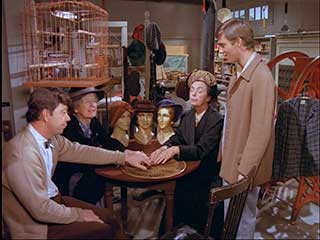
Something else new has come to the Walton house: a spirit board. Specifically: the slightly batty Baldwin sisters’ spirit board (the delightful Helen Kleeb and Mary Jackson as Miss Mamie and Miss Emily Baldwin). You see, store owner Ike Godsey (Joe Conley) wants that board outta his place. The Baldwins come in every day, making him play it with them for hours (they want the spirit world’s advice on Mason jar prices…for “Papa’s Recipe,” no doubt…), and he’s had enough, forcing the board on John-Boy (Richard Thomas), who takes it home.
Now…Olivia and Grandma Walton (Ellen Corby) are immediately suspicious of such paganism, but reprobates Grandpa (Will Geer) and John Walton (Ralph Waite) seem to think the board is just a harmless game, so grudging permission is granted to the Walton kids to mess around with contacting and making union with demons. What they soon discover, however, is that someone or something does have a message for someone in the Walton house. And that message involves Luke…and death.
One of the series’ best episodes, The Ghost Story has a uniquely laid-back, sideways “natural” rhythm and atmosphere to it, quite in contrast to most of the slicker, more recognizable “Hollywood production style” Waltons episodes (and that’s saying something for a show that already had a reputation for being quiet and thoughtful and not at all flashy, compared to most TV series on the air at that time).
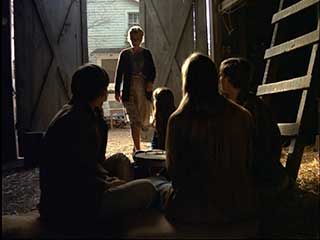
Written by Nigel McKeand (TV’s Family), The Ghost Story‘s script is cagey enough to belay any notion that it’s flat-out endorsing a supernatural angle, no doubt at CBS’s insistence (creator Earl Hamner‘s opening narration, suggesting something otherworldly happens to all of us at some point in our lives, is ameliorated by two key words: “I suppose…”). And just to be sure we get an even-steven approach to the potentially “offensive” material (CBS was very aware of how many Christians watched the show), John-Boy brings in Dr. Freud for a possible “scientific” explanation to keep everything 50-50 (his “I heard one lecture at Boatwright University and read some library books, so now I’m an expert on the mind” lecture to Olivia is typical of “once delightful young writer John-Boy…now annoying college student”). The closing narration plays it as safe as you can get: it’s the power of love. Who’s going to find offense with that?
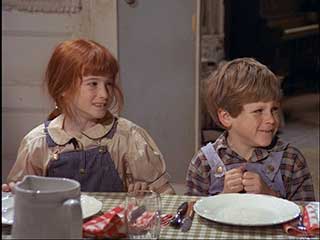
This was lead actor Ralph Waite’s first time directing a Waltons episode, and it’s clear he’s bringing his decidedly different feel and take on the material, to the episode. What could have been overwrought or just plain silly, considering the melodramatic possibilities in the storyline, is rendered wonderfully subdued and contemplative, as Waite takes each scene and lets it play out as naturally and as simply as possible.
A serious theater actor (who was, at best, conflicted about appearing in a weekly network TV series), Waite’s intention is clearly naturalism. The usual Waltons music cues are cut out almost entirely; the editing is slowed way down (if that’s possible) from the usual episode pace, and the actors—particularly the children—come over with a relaxed energy that’s strikingly different than most Waltons outings. They seem like real kids here, reacting naturally and spontaneously to what’s happening in the scene, not kid actors standing there waiting for each person to finish their line.
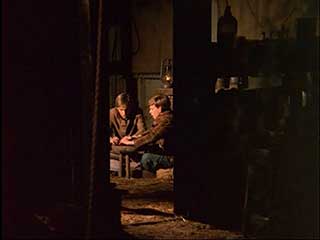
McKeand’s and Waite’s opening scene in the episode, between Waltons Mountain residents Roswell (Jim Gammon) and Horace Brimley (Wilford Brimley) has nothing to do with the main storyline at all, but Waite spends (relatively) lavish time on it, for a TV-length episode, as the two mountain men jaw and joke about having pleurisy. It immediately lets you know this isn’t a typical Waltons episode.
Little naturalistic throwaways like that continue, such as a completely unnecessary cutaway to the children playing with Ike’s dog and puppies under the pool table, during a side-story discussion. Why show that? Because that’s just what kids would do while the adults are talking. It’s a small touch, but it expands the scene surprisingly well. Waite executes a very nice slow crane dolly in on the family at the dinner table, giving a wonderful sense of the family all engaged in their separate group conversations, before he lets us in on each chat. It’s clear his theater training is giving us a totality of experience within these scenes, something that doesn’t often happen in episodic TV from that time, which was much more concerned with A-B-C shooting and editing, to get across dialogue and plot points, and little else.
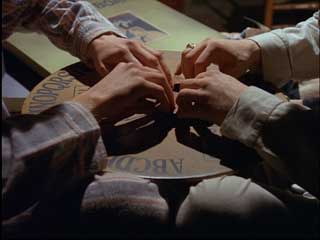
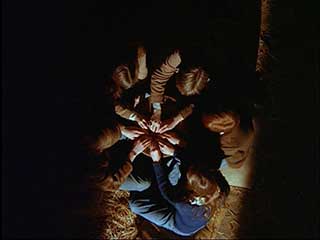
These lovely little touches continue, such as Olivia, during her ironing, calling back little Luke just to wordlessly touch his face (it advances nor references any storypoint―it’s just a sweet, tender moment that seems quite real and natural). Waite knows when to stylize his shots, too; I particularly liked his spirit board scene in the barn, shot in a dark, isolated style not unlike Hitchcock, with a creepy overhead shot as the kids put their hands on the board, before he gives us a rather unsettling, low-angle shot of an angry Olivia busting into the barn, her vaguely threatening tone of voice and posture heightened by her face remaining in dark shadow.
Going just by this episode, Waite was a terrific director; what a shame he couldn’t have been the series’ main director, as well. What a different series The Waltons may have been, had that come about.
The Nightwalker (Season 5)
…and now back to the thoroughly routine (and even mundane).
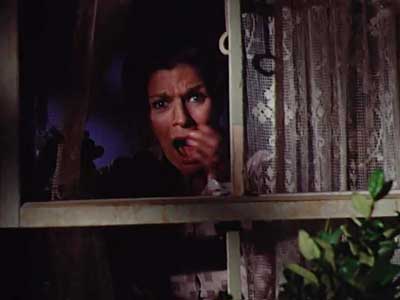
There’s a prowler on Walton’s Mountain, and he’s making everyone nervous, following people in the bushes and roaming around people’s homes at night. The Baldwin ladies are worried they’re going to be robbed. The Walton girls (Mary Elizabeth McDonough as Erin and Kami Cotler as Elizabeth) are frightened to walk to school, and Corabeth Godsey (Ronnie Claire Edwards) better draw her bedroom curtains the next time she goes in there, because the prowler is peeking into her windows.
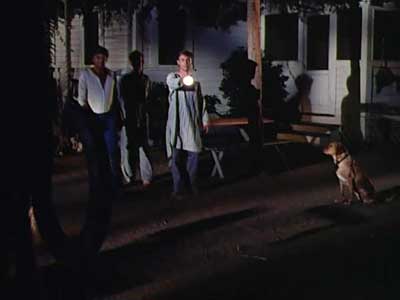
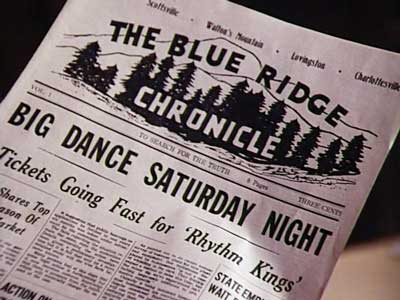
Not only is the “terror” caused by the prowler psychological, it’s oddly economic, too. You see, Jason Walton (Jon Walmsley) was convinced by brothers John-Boy and Ben (Eric Scott) that renting out Ike’s newly refurbished hall to throw a dance, would be a sure-fire money maker for Jason and his band. Unfortunately, with a mad prowler about, no one wants to buy dance tickets because no one wants to venture outside their homes.
RELATED | More 1970s TV reviews
And that leaves Jason on the hook for an empty hall rental he can’t afford. Does a strange woman newly arrived to the Mountain know the answer to what’s going on? And who the hell is weaving all those baskets?
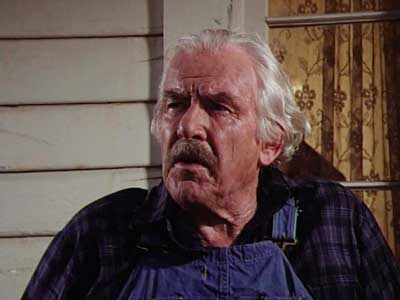
What a letdown from the previous The Ghost Story. Written by Paul West and directed by Harvey Laidman, The Nightwalker is a thoroughly disappointing entry, a pedestrian take on a standard Waltons plot device: “a misunderstood stranger on the Mountain is validated and made acceptable to the community by the Walton family.” Filled with silly p.o.v. shots of the prowler in bare feet and ripped clothes, accompanied by cliched ominous music cues, these look like they were lifted from every cop and detective show from the 1970s showing a psycho killer stalking that week’s episode’s guest star.
But of course by season five we already know that we’re never going to see a serial killer on Walton’s Mountain, so there’s zero tension or suspense for what this prowler may do to the innocent, supposedly terrified residents. Worse, we’re never really told why the prowler is walking around at night. When we discover who he is (and it’s no big surprise, believe me), we get an answer to the basket weaving (and that makes little sense, either), but we never understand why he was acting so creepy out in the bushes. The story, from the beginning, was hollow at the center, and not at all compelling.
RELATED | More Waltons reviews
Luckily, even a minor Waltons episode still has frequent spots of pleasure, usually coming from the cast doing their most to make their brief moments count. Grandma Walton shows she knows her politics when she correctly identifies “the man in White House,” FDR, for perpetuating the Depression (Commie pinko Will Geer smugly counters it was Hoover’s fault). Corabeth and Ike do one of their faultless dithering scenes when they’re frightened by the peeping Tom prowler (Ronnie Claire Edwards was delightful as the imperious Corabeth), but they’re outdone by who else, the Baldwin Sisters (my favorite characters in the series, bar none), who have an amusing bit, going on about in what order the lights should be turned off at night (Miss Emily responds to Miss Mamie’s transgressional suggestion to alter the sequence with, “You’ve always been a free thinker, sister” Hilarious).
And we get another clash between headstrong, lovely Erin and straitlaced Grandma. When Erin wonders if a red sash would brighten up one of Mary Ellen’s hand-me-downs for the upcoming dance, Grandma, horrified, says, “dressing in red is for a ‘fancy’ woman,” (and we know what that means…), to which haughty Erin snaps back, “Maybe I’ll be a fancy woman!”, before Grandma comes in nice and close and threatens, “And maybe I’ll put you over my knee and spank you!” End of discussion. Erin’s sexuality has been firmly repressed (you know whose isn’t repressed? Miss Emily. Check out her frankly disturbing looks at the prowler when dancing with him―he looks like he’s going to throw up). Thank god for these moments, because otherwise, The Nightwalker would be a real slog.
The Changeling (Season 7)
Uh oh…little Elizabeth is turning 13 years old, and you know what that means. Exactly: a poltergeist is summoned up by her intense growing pains fears, and wreaks havoc on the entire household (pretty cool―all I did for my growing pains was wise off in class and get thrown into detention).
On a lesser note in the episode, Jason becomes “Cousin George,” an advice-to-the-lovelorn host on a local radio station. Unfortunately, his sage advice―given to him by more worldly sisters, including Mary Ellen (Judy Norton Taylor)―sets off pretentious culture hag Corabeth, who feels she has nothing in common with her comics-reading oaf of a husband, Ike.
Among hard-core Waltons fans―and I count myself among them―The Changeling is universally acknowledged as the strangest offering ever in the series. Hands down. For a show rooted in low-key, naturalistic drama focused on people and their relationships, The Changeling‘s (relatively) wild, unambiguous aping of the movie, Carrie, and similar other supernatural and ghost stories that were all the rage with made-for-TV movies at that time, is flat-out startling.
And I know the rather incongruous clash of this episode’s TV-lite supernatural scares and the basic anti-sensationalism DNA of The Waltons series as a whole, causes fans―hard-core and casual alike―to at least snicker at how ridiculous the mix is here.
I understand that, and The Changeling can be watched that way, for the genuine enjoyment of that discordant jarring of tones and basic intent. However…I’ve always rather enjoyed it, just for what it is, rather than as a camp goof that should be laughed at. Perhaps that had to do with the fact that I was 13 at the time of the episode, and I understood perfectly well what was being said here (some in my rotten family would have pointed out that watching a “baby show” like The Waltons at my age was a good comparison to what was going on with Elizabeth).
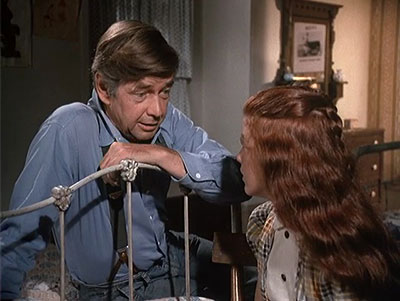
Written by true Hollywood pro Robert Pirosh, and directed by one of the series’ best directors, Lawrence Dobkin, The Changeling strikes me as an effort, however successful or not, to strike out and away from the usually straight (and sometimes staid) dramatic approach of the series. With ratings in freefall after the departure of show anchor Richard Thomas after season five, and the child actors growing older, and the simple fact that the series had been around for six seasons and it was getting harder to come up with new ideas, well…why not try something a little different? What could it hurt at this point?
What’s key to The Changeling‘s legitimacy is the basic truths at the center of the story. Not the “truth” of whether or not you believe in poltergeists (if you think they’re terrifying, try getting help at Home Depot from a Gen Z worker who blankly stares at you while you try to describe a drain wrench), but rather the very real fears and anguish that Elizabeth goes through as she faces that most awful of times: the transition from child to adult.
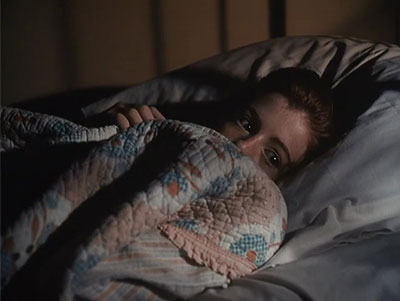
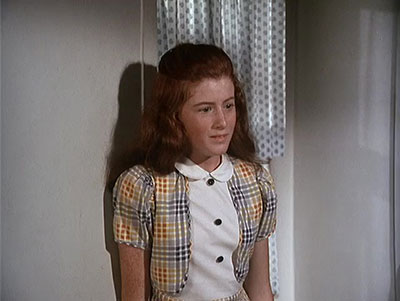
Kami Cotler (who, in interviews, doesn’t give herself enough credit when it comes to her acting) is excellent getting across the confusion and anger and sadness that’s so recognizable in children at that age, when they come to the realization that childhood is soon going to end forever, and that only the unknown awaits them. Seeing Elizabeth act a little snotty, a little aggressive, is quite refreshing at this point, and Cotler handles those moments very well (I love when she snaps, “Turn blue!” to Jim-Bob, played by David Harper, when he asks her to get him a screwdriver).
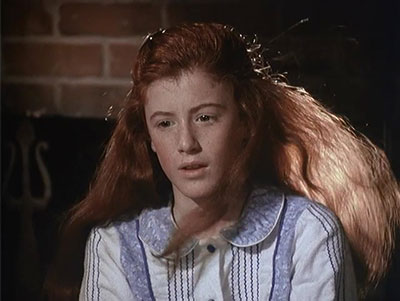
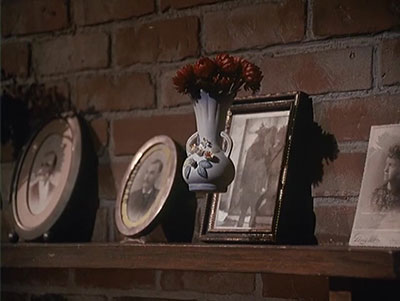
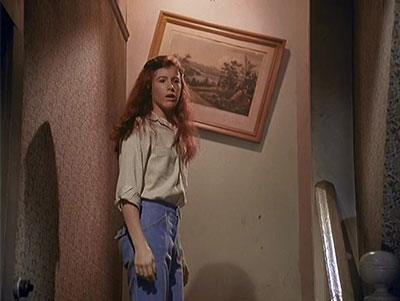
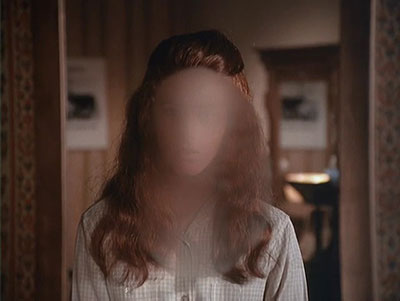
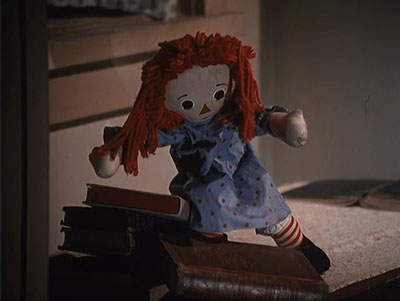
We may laugh at all the shots of frightened Elizabeth suddenly getting a gust of inexplicable wind in her hair, looking like Linda Blair in The Exorcist II: The Heretic (or better yet: Lisa Pelikan in Jennifer), before a picture falls, or a vase jumps off the mantel, or a chair magically levitates, or, in a nicely-mounted scene, her doll Katie starts moving around (yes…those things are shown as actually happening, not as figments of her imagination). However, those scenes are grounded in a completely relatable reality: she doesn’t want to let her doll, Katie, go; she doesn’t want to stop playing baby games, because she doesn’t want to grow up and away from her family, and she doesn’t want her parents to grow old, and die. Who can’t remember feeling those same feelings at some point in their childhood, and feeling powerless to alter them?
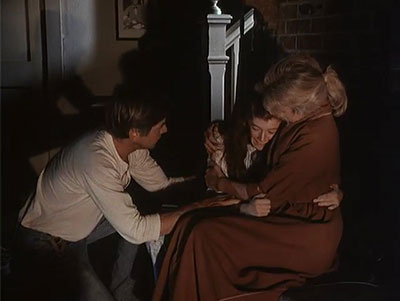
Admittedly, it is jarring to see that final slumber party massacre, where Elizabeth and her guests are screaming in terror, as the Walton clan comes downstairs to witness the poltergeist in action, with the wind wildly blowing through the windows that won’t close, the piano frantically playing itself, and normally calm, rational John screaming for it all to stop. When the spook scenes involve just Elizabeth, Colter can carry them. We buy them. She’s quite good at getting across the unbelieving-yet-believing fear they create in the character.
However, it is impossible to see cowering Olivia and John yelling at Elizabeth to help them stop a ghost terrorizing their house. It just…it just doesn’t work, at the very end. There’s just nothing else in the series prior to this moment, either in form or content, that allows us to make that cognitive and emotional transition to accept such a scene. It’s too jarring to actually work…but the underlying intent of the scene does. And that’s why, ultimately, The Changeling succeeds in being, yes, the weirdest Waltons episode ever…but also one of its most touching.
Read more of Paul’s TV reviews here. Read Paul’s movie reviews at our sister website, Movies & Drinks. Visit Paul’s blog, Mavis Movie Madness!…but mostly TV.

