Can we squeeze another holiday-themed review out of The Waltons, that beloved 1970s CBS family drama? Course we can!
By Paul Mavis
After all: it’s Thanksgiving. Anything is possible. Haven’t you seen? Gas prices magically dropped a dollar a gallon on Nov. 4th! Congress finally shed its bigoted, insular traditions and embraced new-fangled politicians whose cultures and backgrounds and openly-stated subversive and insurrectionist beliefs are completely and utterly antithetical to our Constitution! And certainly most importantly: my lamming-it editor has finally been hunted down and returned to justice, enabling the bank auditors currently overseeing Drunk TV‘s precarious operations to entertain a personal plea from me to cut some of those unfortunately delayed paychecks. Money that is owed to me, gentlemen. Money that’s going to keep the reviews coming in, which in turn will keep the lights burning at the ‘ol Drunk TV HQ. You better believe I’m getting paid, sirs.
Click to order The Waltons: The Complete Series on DVD:

(Paid link. As an Amazon Associate, the website owner earns from qualifying purchases.)
So. The Waltons. Thanksgiving. There’s one more regular series run episode―The Waiting, from Season 8, which aired way back in November 22, 1979―connected to Turkey Day on Walton’s Mountain, so let’s look very briefly at it―because it stinks―while we lament a once-remarkable dramatic teevee series in almost total artistic decline. So pass some more of them possum innards and pickled crow gizzards, and let’s get them Thanksgivin’ vittles et already!
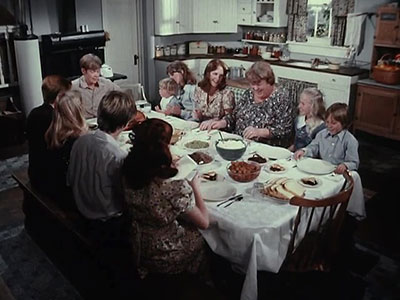
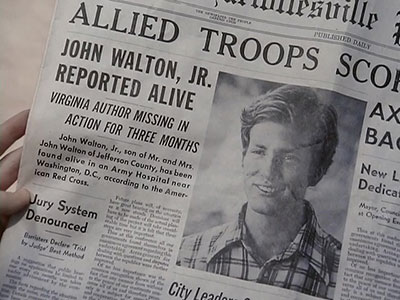
World War II. The homefront. Setting the stage for this episode, the family Walton’s biggest concern at the moment is John-Boy (previously played by Richard Thomas, who thought he was going to go right into movies and be a big star but hoo boy that was never a sure-fire deal for any TV player and he sure found that out didn’t he when September 30th, 1955 played to exactly 37 ticket buyers across the lower 48). Volunteering in the Army and assigned as a reporter for Stars and Stripes, John-Boy’s reported MIA status leaves John and Olivia Walton (Ralph Waite, Miss Michael Learned) heartbroken.
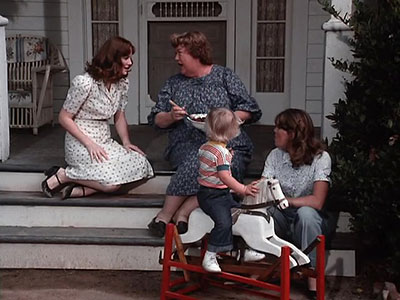
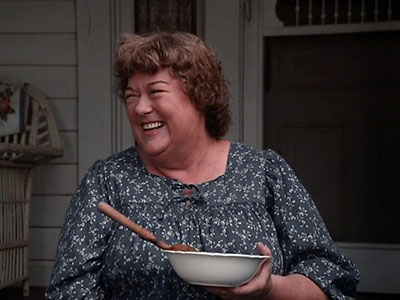
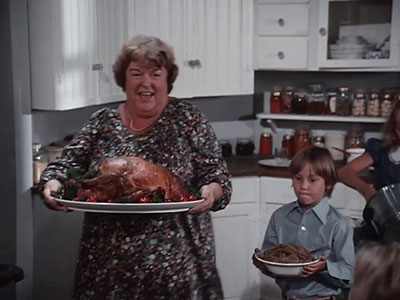
Far worse (for the viewer, at least) is the lumbering appearance on the mountain of Aunt Rose (Peggy Rea), the stout, ample, cheerful-to-a-psychopathic-degree cousin of John’s. In tow, she brings two supposedly adorable, rambunctious grandchildren because the desperate suits at CBS no doubt dictated what the free-falling series ratings needed were a new batch of young Walton kids: Serena and Jeffrey Burton, played by Martha Nix (irritating beyond measure) and Keith Mitchell Cooper (who lacks only two familial traits embodied in his real-life grandfather, legendary child actor Jackie Cooper: talent and charm).
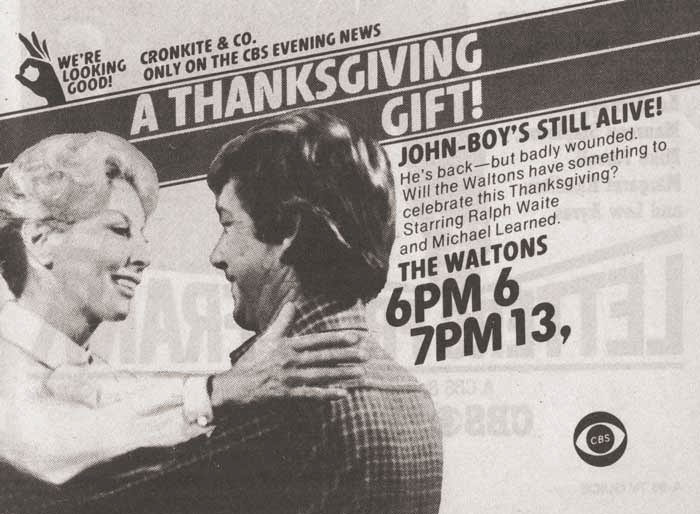
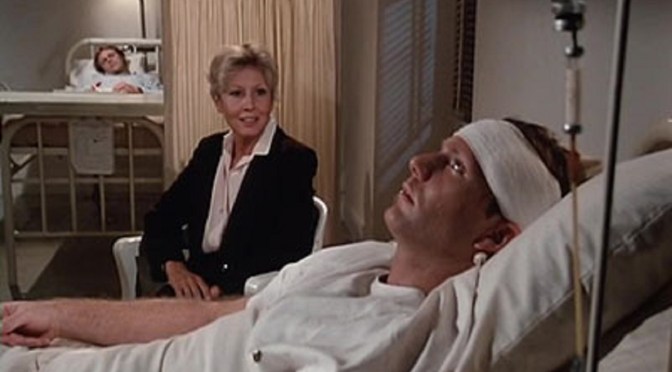
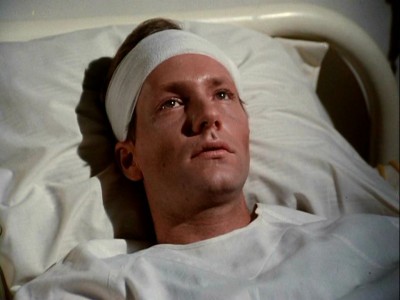
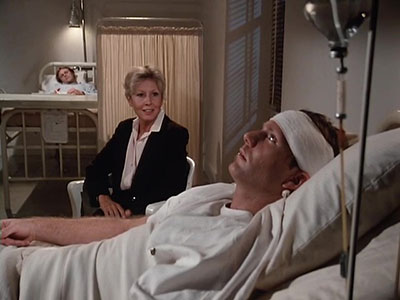
As The Waiting begins, we learn that “Fake John-Boy,” miraculously, has been found! Apparently, while on assignment with Stars and Stripes, “Fake John-Boy” was shot down off the coast of Belgium and picked up by a fishing boat, sans dog tags. Months in a hospital in England did nothing for the catatonic “Fake John-Boy,” who basically just lays there and stares at the ceiling (and he doesn’t even do that one job convincingly).
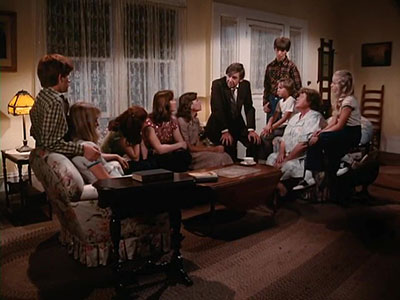
Well! The Walton clan is ecstatic “Fake John-Boy”‘s been found, and John and Olivia race up to the veteran’s hospital in Alexandria to see him. No need to rush, though: he’s basically a rutabaga. Olivia, trying to reach her fake son, manages to connect with “Fake John-Boy”‘s cheerful-but-lonely paralyzed roommate, Sam Stodder (Morgan Stevens) who doesn’t know it but believe me he is lucky—lucky!—he doesn’t have a family.
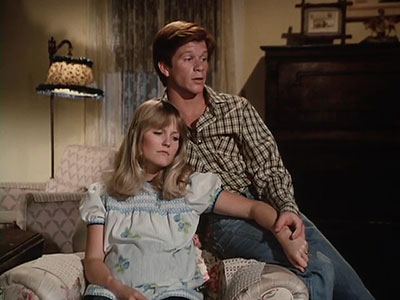
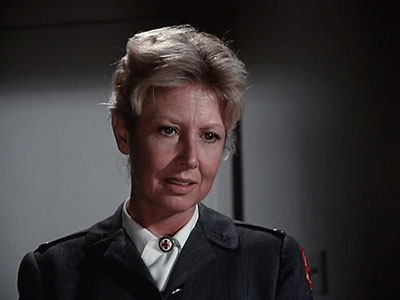
Soon, Livvy’s patience and understanding are noted by the Red Cross’ Mrs. Denman (Diana Douglas), who offers Olivia a job and a bed (it’s cool…it was wartime. These things happened.) if she’d stay at the hospital and work with the families of injured soldiers. Of course everything we’ve seen in the previous seven seasons primes us for Olivia completely abandoning her precious family so she can play “Jenny on the Job.” Will Olivia break on through to the other side of “Fake John-Boy”‘s malingering which you know he’s doing because he doesn’t ever want to go back up in a plane over Europe again?
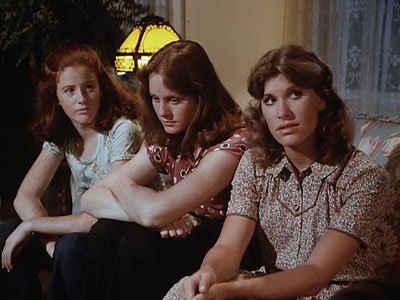
Oh yeah: back on the mountain, Aunt Rose can’t get anyone interested in her cooking (too bad that disinterest doesn’t extend to herself…) or in having a Thanksgiving feast because of “Fake John-Boy”‘s predicament and their boring little subplots that I’m not going to bother to talk about because you might kill yourself.
By the end of the seventh season, two major characters would leave The Waltons. Grandpa Walton, essayed so wonderfully by Will Geer, had died between shooting seasons six and seven, and his loss was keenly felt by fans of the show (there would be a “goodbye” episode during the seventh season, but it still left an unresolved feeling about the character’s disappearance that viewers couldn’t shake).
As well, Michael Learned’s Olivia, the matriarch of the Walton clan, and a particular favorite of the women watching the show, asked to be written out of regular appearances on the series, resulting in her character contracting tuberculosis, necessitating a move to Arizona where she was hospitalized (Learned would come back and guest for a handful of episodes this eighth season, before leaving the series for good…until things didn’t work out career-wise and then guess who suddenly didn’t find it so boring any more to play Olivia in all those reunion movies).
The loss of these two central characters, as well as the continued absence of Ellen Corby‘s Grandma (Corby suffered a devastating stroke during the fifth season, and would only make a couple of appearances as Grandma over the course of the last seasons), only further discombobulated fans who felt The Waltons never really recovered from the departure of Richard Thomas’ John-Boy, the series’ de facto star and central character, in season five—a feeling borne out by the series’ decline in the ratings.
Having never moved once from its Thursday 8:00pm timeslot during its entire run (a rarity for such a long running series), The Waltons went from 15th for the year in the Nielsen’s, during Thomas’ last season, to 21st for the sixth season, to out of the Nielsen Top Thirty altogether during its seventh and eighth seasons (it would crawl back up to 30th for the 1980-1981 last go-around). Clearly, whatever drove The Waltons to such stellar ratings during its first five seasons, was missing once the lead characters that viewers so strongly identified with, began leaving the show.
And while The Waltons never wanted for strong individual episodes each and every season, it was clear that the series’ overall direction was failing by the seventh season (which had an unusual number of simply wrong-headed episodes, including the infamous The Changling (see our Halloween Waltons take), where Elizabeth’s arrival into puberty signals telekinetic powers and a poltergeist—probably the series’ absolute low point—along with ridiculous, ABC After School Special-inspired episodes concerning alcoholism and drug addiction).
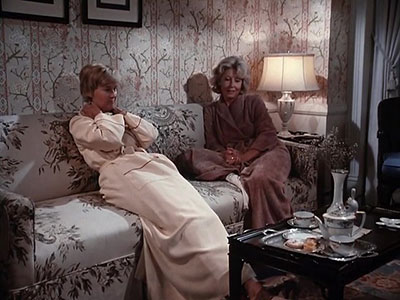
Too much of The Waltons‘ appeal was wrapped up in the original Walton family unit, and once that splintered, the show’s storylines became necessarily diffused. While it was admirable that The Waltons continued to advance its central story arc along a historical timeline, in more or less “real time” for the characters (the Depression segued into World War II), the enormity of the implications associated with World War II didn’t translate nearly as well within the series—probably because we couldn’t invest as much of an emotional attachment to these momentous events as a result of the missing central characters, like John-Boy, Olivia, Grandpa and Grandma. And…they were stuck on the mountain. There were only so many “homefront” storylines they could exploit.
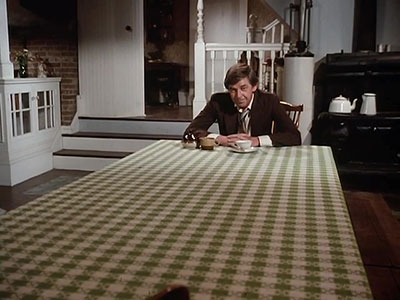
The Depression era backdrop during the first seasons allowed The Waltons to become an insular drama where storylines often revolved around the family trying to survive in their rural enclave, with the thematic undercurrent always focused on John-Boy yearning to break away from his relatively safe abode to venture out into the world as a writer. However, with the loss of Richard Thomas in 1977, the point of the series was largely lost, along with John-Boy. Now, in these final seasons, the war consumes everything, including many of the Walton clan, but we don’t feel the enormity of the family’s sacrifice—because this particular group of people doesn’t resemble the Walton family we identified with during the series’ first five seasons.
RELATED | More 1970s TV reviews
Perhaps that audience perception of The Waltons turning from a believable, realistic family drama into a herky-jerky soap opera could have been avoided if the writers had been more adept at smoothing over the cast changes. Obviously, there’s not much that can be done when a cast member decides to leave a show. They’re physically not there on the set anymore, and the writers have to explain them away somehow within the bounds of the show’s internal logic.
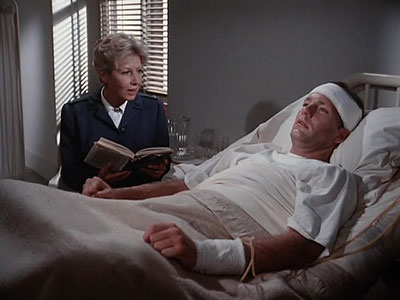
With Michael Learned, she returns in The Waiting‘s eighth season for the first ten episodes, but then disappears again (for good) in a totally unrealistic manner. Supposedly cured of her tuberculosis, Olivia’s arrival home—along with Learned’s steady appearance in episode after episode—seems to indicate to the unsuspecting viewer that she’s back for good on the show: a welcome sign for viewers put off by the disappearing Walton clan. However, her manufactured exit—becoming a Red Cross nurse—makes no logical sense, which shouldn’t be a surprise when its connected with the series’ biggest con job: the re-casting of the John-Boy character.
Whatever in the world possessed the producers to think viewers would accept another actor in the role of John-Boy, is anybody’s guess. But it fails spectacularly here in The Waiting. I won’t name the actor who replaced Richard Thomas—not because he’s a particularly bad actor—but because it’s obviously not his fault for this seriously stupid mistake on the part of The Waltons‘ producers (the guy gets enough grief from the rapidly dying-off goons who haunt the ghostly, abandoned pages of various Waltons blogs).
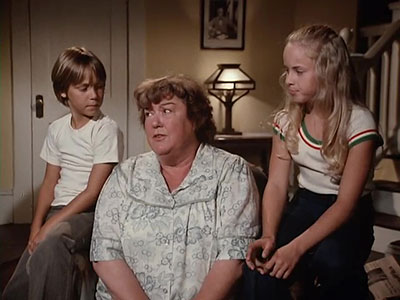
However, since the series’ central story arc was, after all, John-Boy’s adventures as a writer (he remains the narrator of the show, via creator Earl Hamner‘s smooth, reassuring delivery—a gimmick the producers apparently felt they couldn’t afford to lose when Thomas legged it), the producers probably felt they had no choice. If they wanted to continue the series within the historical timeline of WWII, they had to bring back the John-Boy character in some fashion.
I don’t know if they tried to lure Thomas back into playing the role (I would imagine they probably did, with a hefty paycheck to match), but the actor recast as John-Boy simply doesn’t have enough unique appeal to make the character his own (a losing prospect anyway, considering the already iconic status of Thomas’ original portrayal). The new “John-Boy” always feels fake, never real, and only tacked on to keep the series going—a disastrous mistake for a series like The Waltons which always maintained a credible atmosphere of dramatic integrity along with its obvious commercial intentions.
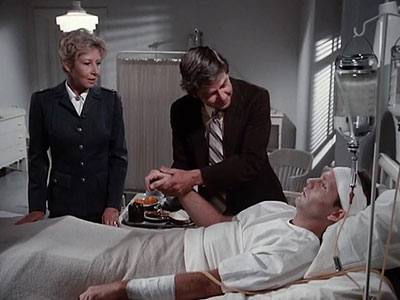
Even worse, the manner of “Fake John-Boy”‘s return is magnificently flubbed here when the writers first introduce him. Once Olivia and John succeed in breaking through to “Fake John-Boy”‘s psyche (he calls out, “Mama,” at Thanksgiving), this small ray of hope spurs Olivia to join up with the Red Cross at the military hospital, so she can nurse “Fake John-Boy” back to health. And that’s all we ever see of Olivia again.
Which would be at least logical…if “Fake John-Boy” never actually recovered. The writers could have made occasional references to Olivia still looking after “Fake John-Boy,” thereby keeping up a vague connection with the character while letting her slip away from the week-to-week episodes. However, the next time we see “Fake John-Boy,” in The Prodigals, Ben comes by the hospital, and “Fake John-Boy” is…just fine. He’s resting comfortably, convalescing, and speaking normally. The fog, apparently, has lifted for “Fake John-Boy.”
Ben casually mentions that he saw his mom inside the hospital, and that’s that. “Fake John-Boy” eventually starts coming home on week-long furloughs, before he joins the cast permanently at the end of the season. All of which, of course, begs the question: where, then, is Olivia? She never shows her face again, nor is she mentioned by the others. At least during the last part of the eighth season, she ceases to be.
It makes absolutely no sense, in context with the rest of the series, for a character like Olivia, who couldn’t stand to be away from her family for one night, to suddenly disappear as a Red Cross nurse, with absolutely no explanation as to why she wasn’t back home with “Fake John-Boy,” having apparently seen him through his ordeal.
Traditionally, teevee producers and writers frequently think that viewers aren’t all that savvy to interruptions in story continuity, such as the magically disappearing Olivia, but for a show like The Waltons, where the fans respected the writers for treating them with intelligence by never writing down to them, such a gimcrack paste-over job of Michael Learned’s departure, coupled with the frankly ridiculous notion of recasting the John-Boy character, spelled the final straw for many loyal viewers.

Read more of Paul’s TV reviews here. Read Paul’s movie reviews at our sister website, Movies & Drinks. Visit Paul’s blog, Mavis Movie Madness!…but mostly TV.

